| Title |
Browning Arms Company Collection, Box 009, Folder 02 |
| Creator |
Browning, John Val; Goddard, Grant F.; Browning, Marriner Bigelow; Frost, G. E.; Comeaux, C. Stewart; Coleman, Richard H.; McFarlane, Charles; Browning, Marriner A.; Ormsbee, A. G.; Babson, A. C.; United States. Patent and Trademark Office; Invention Incorporated; Winchester Repeating Arms Company; Browning, Val A., 1895-1994; Ellis, Douglas B.; Browning Arms Company; Askins, Charles; Sheldon, H. P.; Lindsey, Theodore Clay; FN (Firm : Belgium); Woodson, William T.; Prutzman, John M.; Rafter, John R.; Hume, James P.; Pattishall, Beverly W.; Levy, Beatrice; Brearley, J. A.; Russell, John E.; Griffith, G. H.; Browning, Matthew S. |
| Contributors |
J. M. & M. S. Browning Company; Winchester Repeating Arms Company; Browning Arms Company; Sporting Arms and Ammunition Manufacturers' Institute; Remington Arms Company; Federal Cartridge Corporation; The Poly Choke Company; United States. Patent and Trademark Office; Outdoor Life; Lindsey, Prutzman And Just; Lindsey, Theodore Clay; Rogers and Woodson; Rafter, John R.; Wilkinson, Huxley, Byron & Hume; United States. Department of State. Bureau of Foreign Commerce; Rogers and Reed; United States. Bureau of Customs |
| Description |
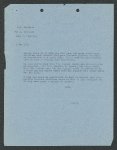
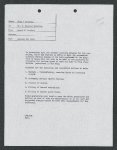
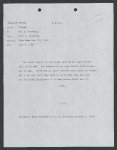
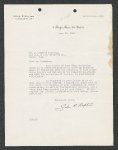
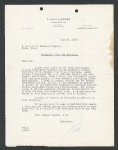
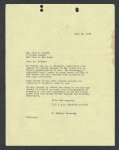
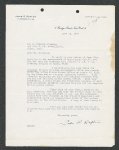
Primarily correspondence from Marriner Bigelow Browning to colleagues, such as Val Allen Browning and Douglas B. Ellis, regarding manufacturing and design matters. Additionally it is consistently discussed with Theodore Clay Lindsey in respect to legal matters such as their trademarks. |
| Subject |
Firearms industry and trade--United States; Firearms industry and trade--Utah; Browning Arms Company; Business enterprises--Utah--Ogden--History; Fabrique Nationale automatic rifles; Remington Arms Company; Sporting Arms and Ammunition Manufacturers' Institute; Winchester Repeating Arms Company; United States. Patent and Trademark Office; Firearms--Design and construction |
| Digital Publisher |
Digitized by Special Collections & University Archives, Stewart Library, Weber State University. |
| Date Digital |
2026-04 |
| Date |
1930; 1931; 1932; 1933; 1934; 1935; 1936; 1937; 1938; 1939; 1940; 1941; 1942; 1943; 1944; 1945; 1946; 1947; 1948; 1949; 1950; 1951 |
| Medium |
correspondence; notes (documents); documents; ephemera; newspaper clippings; publications (documents); financial records; legal records |
| Spatial Coverage |
Belgium; New York City, New York, United States; New Haven, New Haven County, Connecticut, United States; Ogden, Weber County, Utah, United States; Bridgeport, Fairfield County, Connecticut, United States; Minneapolis, Hennepin County, Minnesota, United States; Hartford, Hartford County, Connecticut, United States; St. Louis, Missouri, United States; Washington, D.C., United States; Ames, Major County, Oklahoma, United States; Falls Church, Virginia, United States; Herstal, Liege, Wallonia, Belgium; Chicago, Cook County, Illinois, United States; Portland, Multnomah County, Oregon, United States; Richmond, Virginia, United States |
| Type |
Text |
| Conversion Specifications |
Archived TIFF images were scanned with an Epson Expression 13000XL scanner. Digital images were reformatted in Photoshop. |
| Language |
eng |
| Rights |
Materials may be used for non-profit and educational purposes; please credit Special Collections & University Archives, Stewart Library, Weber State University. For further information:  |
| Sponsorship/Funding |
Funding generously provided by the Val A. Browning Charitable Foundation. |
| Source |
Browning Arms Company Collection, MS492, Box 9, Folder 2, Special Collections & University Archives, Stewart Library, Weber State University. |
| Format |
application/pdf |
| ARK |
ark:/87278/s6c1g19f |
| Setname |
wsu_ba |
| ID |
184764 |
| Reference URL |
https://digital.weber.edu/ark:/87278/s6c1g19f |
| Title |
Page 65 |
| OCR Text |
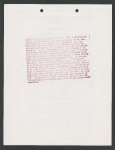
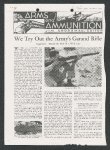
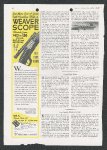
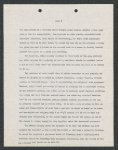
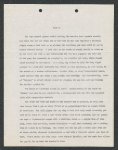
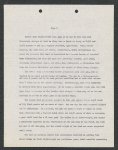
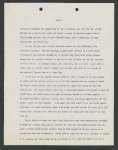
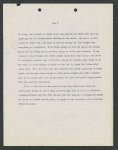
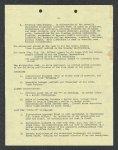
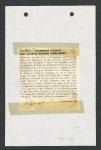
Show Sports 1940 Afield—N ovember, wi Vephie= “ = eC.Fs SEMIN Ali A MUNITION JIM CROSSMAN, EDITOR We Try Out the Army's Garand Rifle Suggestion: WW: STILL note ‘round and prints concerning abused and considerable about the highly in the army’s publicized Handle the New M/1 With Care fuss’ public much- M/1 or Garand rifle. It’s been accused of practically everything from petty larceny to wife beating—in many cases by folks who oughta know. Having done a bit of recent shooting with the rifle, we decide to contribute our two-bits-worth to the fray, as it seems to be a free-for-all. We get hold of a couple late M/1 rifles, put them on the dissecting table and look "em over carefully. We have an instruction manual on the gun, telling in great detail how to take it all apart. This is very fine, except that the book was printed three years ago and parts of it don’t apply to these latest guns, making it very handy. But a little experimenting and study enable us to get them stripped —and put back together again, which is something different. Then we lug the two pets out to the range and pour all our spare ammunition through them. But meanwhile we noted a major The change up on the forward end of the gun. Being a gas operated gun, it’s necessary to steal a portion of the powder gas behind the bullet to work the mechanism. The early guns had a sort of false muzzle arrangement for grabbing the gas. But now they’ve merely drilled a small hole in the barrel near the muzzle. As soon as the bullet clears this hole, some of the gas dives down and starts to work on the piston which operates the mechanism. This M/1 rifle, of course, is designed purely as a military rifle. Now there are several qualities a good military rifle should possess. Above all things, in our opinion, it should be reliable. It ought to be reasonably accurate, should be easy to keep clean and in operating condition, should be easy to repair, should be rugged When the 8- cartridge clip is forced the magazine the down i bolt is released. Garand (M/1) and fool-proof, should be cheap and simple to make—and so on—you can think of other things to add to the list. _ This item of reliability we think is of the utmost importance, and closely related to it are ease of keeping clean, ruggedness and similar virtues. If a rifle isn’t reliable it matters not how many.» other talking points it has. The soldier who has to tramp perhaps 100 miles lugging a heavy gun, only to find that it gives him trouble when he needs some shooting, certainly isn’t going to be com- pletely entranced with the gun. We mean that the rifle should work well under good conditions—and it must also work under almost any conditions of dust, dirt, water, mud, lack of lubrication and general neglect. A soldier in battle doesn’t have any time to fuss around flicking bits of dust out of screw slots. He usually finds himself crawling around in gooey mud or dust a foot thick. Anything that has much oil or grease exposed will soon acquire a heavy coating of dust, so you may have trouble finding the oil after awhile and the gun will work harder than if it had been perfectly dry. Other folks may think that certain dif- rifle. ferent items should head the list of desirable properties and you can make out your own, but it’s certain that reliability will be well up. Accuracy, of course, is a very desirable attribute, but most rifles today are accurate enough for military ao ee ee | NATIONAL RIFLE AND PISTOL MATCHES AT CAMP PERRY Story and Photographs on Page 18 — work. Of course the more accuracy the better, but for a service rifle we wouldn’t sacrifice any reliability for an inch or two at 200 yards. Now mind you, we don’t say accuracy is not a very desirable trait, but we do think that reliability is more important. Closely allied with reliability is the matter of keeping the gun _ properly cleaned. The bore, chamber and other parts exposed to the powder gas should be easily cleaned with the minimum of tools—or shortly the thing will be badly rusted. And so, armed with these thoughts on the matter, with a couple late rifles and a large quantity of assorted service ammunition of varying ages and types, we |
| Format |
application/pdf |
| Setname |
wsu_ba |
| ID |
184829 |
| Reference URL |
https://digital.weber.edu/ark:/87278/s6c1g19f/184829 |