| OCR Text |
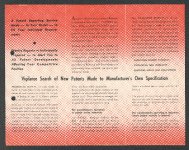
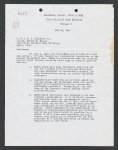
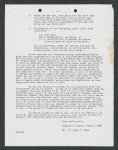
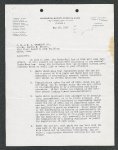
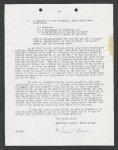
Show ABOUT CHANGE IN TRADE-MARK RULES A new set of trade-mark rules will go broadcasting or advertising service. Here- into effect in the U.S. on July 5. Thou- tofore, this type of mark could not be reg- sands of owners of these special marks, identifying their particular brands of goods, will be affected by the change. In addition, thousands of others for the first time will be eligible to register symbols or devices to be associated with their products or services. Thus, it is time for present and future istered under trade-mark laws. Officials of the Patent Office have not decided how far these services marks can go. For instance, they have not yet determined whether such devices as the sound of gongs or other noises, used to identify certain radio programs, will be registerable as service marks. holders of trade-marks to think about the meaning and effects of the new law that Who Greater property rights are given to own- ers of trade-marks and trade names by the new law. More protection also is given to American trade-marks abroad. But certain steps must be taken to assure these rights, and to prevent a lapse of the marks now registered with the Patent Office. Why is the law else register can identifying marks? will begin to operate in five months. Marks that certify as to the quality or standard of goods can be registered under the new. law by persons who do not manufacture or sell the goods. This includes seals of approval that certain organizations put upon articles that they examine and find up to required standards. It also includes certification of the origin of goods, changed? or the The changes are made to broaden the coverage of the trade-mark law in the use of identifying symbols for particular goods and services. In addition, the laws on trade-marks, now scattered through a number of statutes, are put together in a single act that is simplified and brought up fact that they were produced union workers. In addition, marks nating membership in a particular co-operative, union or other organization can be registered under the new law. Heretofore, none of these marks could be registered at the Patent Office. to date. Protection against abuses through | What must present trade-mark ers do to keep their rights? infringements also is tightened. Who benefits by the changes? by desig- own- Many individuals and companies now holding trade-marks will have to file affidavits before their marks are due to expire if they want to renew their registration and keep Many businessmen, companies, individuals, labor unions and other organizations can make wider use of special marks to identify their products and services with the public under the new law. They can create their own symbols or titles to represent their products, and, if acceptable, can register these marks with the Patent Office, show that the marks have not been abandoned, and are still in use. This provision is expected to clear the registers of the Patent Office of many marks that have become obsolete and are no longer used by the assuring them exclusive use of the marks. owners. The new law expands considerably the types of mark that can be registered. And restrictions are eased on use of names and geographical origins to identify particular commodities. Can new marks be registered now? No, not under the new law. The old rules will apply until July 5, but registration still can be made under them. Meanwhile, the Patent Office is setting up the machinery to operate under the changed procedure by midyear, and is writing rules and regulations to go with the revised law. The new application forms will not be ready for several months. What new groups can register marks? their exclusive rights. These affidavits must 3 Another group of trade-mark owners (who registered under the act of 1920 and whose marks previously had no expiration date) also will have to take action to keep their marks in effect. This group can renew their registration in case domestic registration is needed for foreign protection. Otherwise, these trade-marks will expire Jan. 5, 1948, or 20 years after the original registration, whichever is later. In some cases, new registrations can be made of these trade-marks. For how long istered? may marks be : reg- Twenty years. But in the sixth year the owner must file an affidavit showing that the mark is still in use, or, if it is not being used, giving an explanation that it has Under the new rules, an individual or firm that provides service, but does not manufacture or sell goods, can register a certain mark to identify the particular service. This mark or symbol might be used to sixth year. Registrations usually can distinguish the services of a hotel or res- renewed use, another taurant, 20-year period. 46 a laundry or repair shop, or a not been abandoned. Otherwise, the registration will be canceled at the end of the after 20 years’ for be Can a trade-mark holder avoid having his mark contested? — Yes, to a certain extent. This is an important innovation of the new law, and provides greater security for owners. After five years of continuous and undisputed use of a registered trade-mark, it becomes incontestable unless fraud is shown in connection with its registration or use, or un- — less the mark has been abandoned or has become the common descriptive name of — an article or substance on which the patent has expired. 3 Can more than one person or use the same mark? register = The new law permits concurrent registration of the same or similar marks by two or more applicants if each used the mark before filing an application. In such cases, the Patent Office will hold hearings, and must be convinced that consumers will not be deceived by the dual registration and use. The Patent Commissioner can place limitations on the manner and area in which each person uses_ the mark. In addition, the owner of a trade- mark may assign it to someone else in his field. Such assignments must be recorded in the Patent Office. Pending trademarks also can be assigned in this way. A registered trade-mark also may be used by related companies under the new law. This is another innovation, and permits such related companies to use the same mark, so long as the public is not deceived. How are U.S. trade-marks abroad? protected Heretofore, American holders of trademarks have been handicapped in obtaining protection abroad because international agreements entered into by the United States have not been approved by Congress. The new law enacts these commitments into law. This means that the rights of U.S. trade-mark owners in foreign countries involved in_ these agreements, and the rights of citizens of those countries in the United States, will be mutually safeguarded. Can trade-mark federal courts? suits be taken to Yes. A person dissatisfied with the Commissioner’s ruling on his patent can take an appeal to the Court of Customs and Patent Appeals or bring suit in a federal district court. Civil suits involving infringement or damages can be taken to a district court, a circuit court of appeals or even to the Supreme Court for review under the new trade-mark law, which is officially known as the Lanham Act of 1946. THE UNITED STATES NEWS |