| OCR Text |
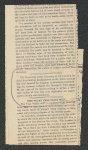
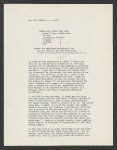
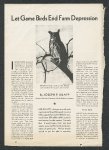
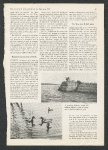
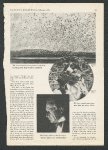
Show NATION’S BUSINESS for February, game America. have birds in We mourned sufficiently over the disappearance of the passenger pigeon and the heath hen. Unless we take thorough- 1931 61 fairly stiff training in mendous numbers every year during the business methods, I have no use for the impracticable. There wouldn't be a particle of sense—except for a dash of long open seasons. They know how to have their cake and eat it, too. They have a wonderful game reproduction and a thorough replacement system. Having had a ly practical steps and adopt business- sentiment—in going into this broad plan like methods we will soon be attending the obsequies of all migrating fowl and upland game birds. Yet we have passed more game laws than any country ever had and amended them more often. There has been an ever-rising tide of game legislation. But the more laws we have passed the less game we had. All this legislation was almost wholly restrictive, and no attention whatever is paid to propaga- of game-bird reproduction unless we had facts proving its soundness, practicability and, therefore, its assured success. It has already been tried successfully elsewhere. tion or to the great economic, commer- By using methods similar to those the Foundation will attempt to popularize in America, the British in six years replaced their wild game birds, almost totally destroyed during the War. What has been done on the grouse moors of Scotland and the partridge and pheas- ant preserves of England, can be dupli- cial possibilities of wild game birds as a national crop, as a source of new income for the farmer. Heath hens became extinct within a few years after the law had prohibited killing them. cated on a far grander scale in America. We have a more favorable terrain, onetenth of the British population per Practical conservation of birds wealth—everything needed for success. The Game Act of Great Britain, passed in 1831, has been the basic game law of that people for a century. In all VARIOUS individuals and organizations, farseeing and unselfish, have tried to check the appalling waste of our gamebird crop, and in many cases their efforts have been supplemented by trained government and state officials. But these efforts have been sporadic, widely scattered, uncoordinated and_insufficiently financed. To bring about a complete change in the present method of game bird control, conservation and square mile and fairly well distributed that time only minor details have been amended. Since the Act was passed, partridges have increased more than 200 per cent and pheasants more than 1,000 per cent. Game birds are killed in tre- The War hurt British game THAT system had a severe test during the World War, and it is this test which convinces me that we can make the system work in America with splendid commercial results.) When the War started, most of the 12,000 British gamekeepers went into the service and, after the second year, game production virtually came to a standstill. Naturally vermin increased rapidly. Foxes, weasels, stoat—all manner of greedy little carnivori—multiplied and took a heavy toll of wild nesting birds. At the Armistice the number of gamekeepers had been greatly reduced and less than ten per cent of the annual carryover of game birds for breeding purposes was available. It looked as if game in Great Britain was done for. Not a bit of it. Using their old, welltested methods, the British put the supply back to normal in those six years from 1919 to 1925, an increase of 900 replacement will take years and a lot of money. You can’t work for a year or two, getting people interested, and then shut up shop because no money is left to pay the rent. We organized the More Game Birds in America Foundation so that this movement can get going and stay going with plenty of financial oil for the gears. The Foundation has a million dollars to start with and can get more as necessary. BUREAU OF BIOLOGICAL SURVEY A sporting industry worth 300 million dollars a year to farmers is the Foundation’s goal per cent, and the game-bird. industry once more began to play an important part in the economic scheme of things —a part we here in America scarcely comprehend. It once more gave employment to thousands, pleasure to men of moderate means as well as to the rich, and sent to the market at poultry prices a fine food supply. Game farms and gamekeepers wasted no time bemoaning the situation and changing the law. They turned a deaf ear to the people who urged “Cut down BUREAU OF BIOLOGICAL SURVE |