| OCR Text |
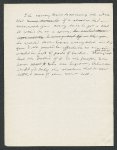
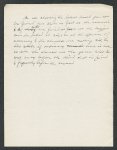
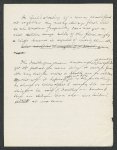
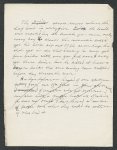
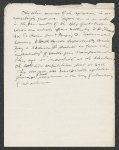
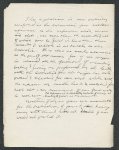
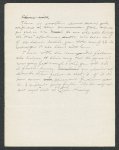
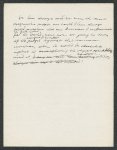
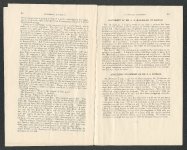
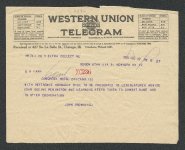
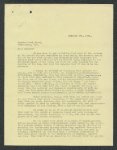
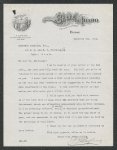
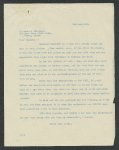
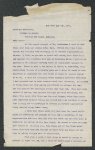
Show 1—SMOOTThe amendments which I have yroposed to H. Ri 8245 provide in brief for the repeal of all war taxes; the retention of corporat te and personal income taxes at the present rate; the s reduced to the point of demonstrated efficiency: the retention of tobacco and ae ince taxes; the levy of import duties in pe to terms and the remainder revenue secured by » levy of a 3 per cent tax on of Federal all articles war purely produced or man tured at the pr int where they are sold for final ¢ onsumptic On or use hout further process of manufacture. By the repeal of all war taxes I mean the repeal of the excess-profits tax to be effective as of Jan: ry. 1, 1921, and the repeal of the taxes on transportation, telegraph. and telephone, express, oil pipe line, beverages, cosmetics, admissions and dues a all of the excise taxes provided for under Title IX of the Revenue Act of i918; the Tae taxes under Title XI, and all of the special taxes previded for under Title X except those on narcotics. the repeal of all of these taxes to be effective January 1, 1922. The repeal of these various taxes will mean a loss of revenue according to the Treasury Department esti inates of $549,650,0 00 for the fiscal year 1922 and >£89,878,000 for the fiscal year 1923 The deficiency in revenue for the fiscal] years 1922 and 1923 will be more than offset by the revenue to be obtained under the manufacturers and producers tax which I propose. For the fiscal year 1923 an ample marecin of safety will be provided by the retention of the capital stock tax and the imposition of this tax would in part offset the re duction in the taxation of c orporations through the repeal of the excess Pronts. tax. It is hardly necessary to advance arguments as to why ail of these taxes should be repealed. They were adopted as temporary war measures : provide immediate revenue to meet the emergency. It was understood by everybody that they would be repealed KOR SOABIY after the termination of the — They have been borne patiently for almost three years by practically every individual in the coubtry. They are Sele annoying, discriminatory, and unfair. The millions of people whe attend our theatres daily are stil] ‘confronted with the addition of a 10 per cent war tax. Phe millions of people who ride upon trains are daily faced with an 8 per cent tax. Likewise aS to those who send packages by e3 xpress, messages over the wire and the millions of farmers w ho transport their goods by railroad. In addition the three million farmers who own automobiles have had to bear a 5 per cent tax ~ any purchase of an automobile, tires, or accessories. In fact, there is hardly a person who does not meet with some form of war taxes in his daily life, whether it be in_the matters referred to or on the purchase or sale of real estate, musical instruments, jewelry, proprietary medicines, soft drinks, and beverages , and the many other forms of special taxation, Nor is it necessary to ‘enlarge cess-profits tax should be repealed, but every ‘reason whic a justifies its repeal on January 1, 1922, as recommended in. the committee report, applies to its repeal as of January 1,.1921. Tn DEOpOsigs the substitute measure provided for in Inv amendments [ have endeavored to submit a single method of peccnion which will provide comparatively few collection points as compared with the various forms of taxation which I propose to have repealed. Through the Substitution of my proposal for all of these miscellaneous taxes, the Treasury Department will . be supplied with six main sources of revenue: 1. Individual income tax, 2. Corporation tax, 3. Customs duties. 4. Inheritance or estate tax, ». Fobacco. tax. 6. Manufacturers’ and producers’ tax. The manufacturers’ and producers’ tax is a sales tax, but of: a limited form, applying as it does only to articles when sold: for consumption or use without further process of manufacture. Defining the tax in this way eliminates any cumulative effect which has been one of the principal objections to a gross turnover sales tax, though that objection readily can be met. It affords no advantage to an integrated or many-processed business over the nonintegrated competing business. It is a single tax to be paid once only and then upon the sale of the article, when sold for consumption or use without further proeess of manufacture. My amendment provides for a similar tax upon imported articles so that there will be no disadvantage to American manufacturers or producers in competition with foreign goods. It also provides for the exemption of sales of less than $6,000 per year, thereby eliminating the necessity of auditing small-sized accounts. Many inquiries have been made as to the application of this tax to agricultural products. The average value of the products of farms for the year 1921 has been estimated by the Department of Agriculture at between $1 000 and $2,000, SO that Phe fA NO) exemntion will practically exempt farm |