| OCR Text |
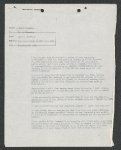
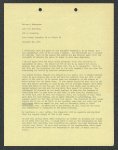
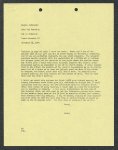
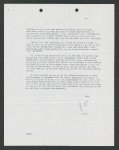
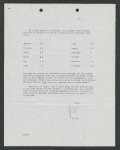
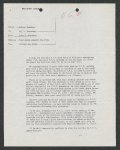
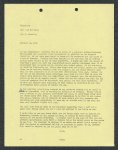
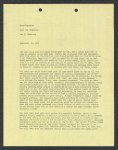
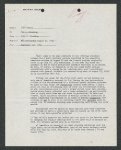
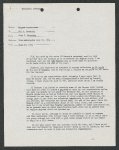
Show Double Automatic John Val Val A. Browning August 3, I think memos Browning 1954 we on the should get subject for the dates), back (f I thought into will not harmony take I was getting on time this gun. From to back through a very gO comprehensive your numerous the files picture of the functioning of the first guns in your extensive trials, and I gathered that you were having trouble, especially with the ejection of the shells of weak loads such as Winchester 23/4 wm 1-1/8 oz. loads. You were doing various retouching and replacing of parts in experiments which were quite all right as far as learning something of the reasons for the failures, but, and as mentioned in one of your memos, this work was costly and seemed to be getting on F.N."s nerves and effecting their confidence in the gun, not to mention their enthusiasm. I asked you to send me two unretouched guns which you did, and these guns gave the same failures which you had been having, but with two simple modifications they worked and are still working perfectly. Ofttimes when you are right in the midst of a development, an obviously simple remedy (especially one which has admittedly been tried before) is obscured by all of the other possibilities. This could have been the case, and so I hastened to let you know the results of our simple trials. I also requested you to send me two more guns, the same off the machine state without retouching but have not heard from them. Incidentally, the first two (actually there were three) took a very long time in getting out to Ogden. Now it would appear from your letter of July 20th that these failures to eject are not so important at the present state of production, Let me point out that mechanically it is definitely demonstrated that this gun will work. From what I gather the difficulties encountered in perfecting its functioning spring in large measure from the methods of manufac turing the component parts. Let me point out that this is entirely an F.N. responSibility. Somehow I obtained the impression that everything was fine until I suggested the double friction rings and that F.N. had the idea that a return to the simple ring would solve all of the difficulties. If this is the case, I can say without hesitation, return to the Simple one piece ring. According to your memo of the 20th, there are other mechanical problems, and generally these seem to be results of the manufacturing processes. You can, of course, in an attempt to cheapen processes Spoil the functioning of a gun to a point where you are not making economies — on the contrary. I know that eventually you will methodically iron out all of the difficulties, but frankly I have |