| OCR Text |
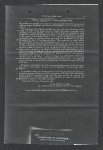
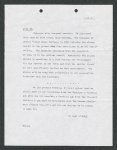
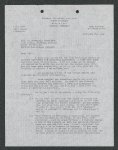
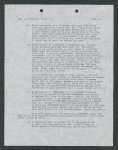
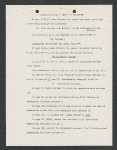
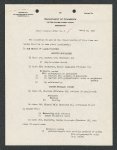
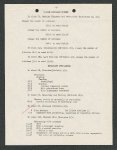
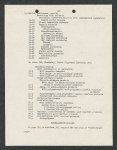
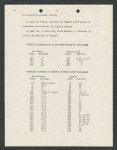
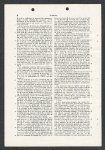
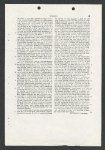
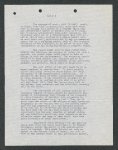
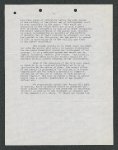
Show ‘In design cases: For three years and six months, $10; for seven years, $15; for fourteen years, $30. ‘‘On every application for the reissue of a patent, $30. ‘‘On filing each disclaimer, $10. ‘‘On an appeal for the first time from the primary examiners to | the examiners in chief, $10. ‘‘On every appeal from the examiners in chief to the commissioner, $20. ‘‘Ror uncertified printed copies of specifications and drawings of patents, 10 cents per copy: Provided, That the Commissioner of Patents the United States with such copies as pply public Hbrari d, for $50 per ant: further, Provided t the Commis- sioner of Patents may exchange copies of United States patents for those of foreign countries. ‘‘Wor copies of records made by the Patent Office, excluding printed copies, 10 cents per hundred words. ‘‘For each certificate, 25 cents. ‘‘For recording every assignment, agreement, power of attorney, or other paper of three hundred words or under, $1; of over three hundred and under one thousand words, $2; and for each additional thousand words or fraction thereof, $1; for each additional patent or application included: or involved in one writing, where more than one is so included or involved, 25 cents additional. ‘‘For copies of drawings, the reasonable cost of making them.’’ Sec, 3. That the provisions of section 2 hereof shall take effect two months after the approval of this Act. ACT APPROVED FEBRUARY 28, 1927. An act to amend section 129 of the Judicial Code, allowing an appeal in a patent suit from a decree which is final except for the ordering of an accounting. Be it enacted by the Senate and House of Rrepresentatives of the Umted States of America in Congress assembled, That when in any suit in equity for the infringement of letters patent for inventions, a decree is rendered which is final except for the ordering of an accounting, an appeal may be taken from such decree to the circuit court of appeals: Provided, That such appeal be taken within thirty days from the entry of such decree or from the date of this Act; and the proceedings upon the accounting in the court below shall not be stayed unless so ordered by that court during the pendency of such appeal. ACT APPROVED MARCH 3, 1927. An Act amending section 52 of the Judicial Code. Be wt enacted by the Senate and House of Representaties of the Umted States of America in Congress assembled, That section 52 of the Judicial Code be, and the same is hereby, amended by adding thereto the following: ‘‘And upon the filing of a bill in the Supreme Court of the District of Columbia wherein remedy is sought under section 4915 or section 4918 of the Revised Statutes, without seeking other remedy, if it shall appear that there is an adverse party residing in a foreign country, or adverse parties residing in a plurality of districts not embraced within the same State, the court shall have jurisdiction thereof and writs shall, unless the adverse party or parties voluntarily make appearance, be issued against all of the adverse parties with the force and effect and in the manner set forth in this section; provided that writs issued against parties residing in foreign countries pursuant to this section may be served by publication or otherwise as the court shall direct.’’ Nt ‘ 3 anesPB: NS RRA SSSA AAU SES vs * Se er ee at AOD = ONE EO NI AE AE ULE VEU UCUMLI ESS conducted as provided in section 4915 of the Revised Statutes. Thereupon the appellant shall have thirty days thereafter within which to file a bill in equity under said section 4915, in default of which the decisions appealed from shall govern the further proceedings in the case. If the appellant shall file such bill within said thirty days and shall file due proof thereof with the Commissioner of Patents, the issue of a patent to the party awarded priority by said board of appeals shall be withheld pending the final determination of said proceeding under said section 4915.”’ Sec. 9. That section 4912 of the Revised Statutes of the United 4 States,be amended by striking out the wokds “Supreme Court of the * District of Columbia’’ and substituting théertror the words “Court of Appeals of the District of Columbia.’’ Sec. 10. That section 4913 of the Revised Statutes of the United States be amended by striking out the words ‘‘ And at the request of any party interested, or of the court, the commissioner and the examiners may be examined under oath in explanation of the principles of the thing for which a patent is demanded.”’ Sec. 11. That section 4915 of the Revised Statutes of the United States be amended to read as follows: “Sec. 4915. Whenever a patent on application is refused by the Commissioner of Patents, the applicant, unless appeal has been taken from the decision of the board of appeals to the Court of Appeals of the District of Columbia, and such appeal is pending or has been decided, in which case no action may be brought under this section, may have remedy by bill in equity, if filed within six months after such refusal; and the court having cognizance thereof, on notice to adverse parties and other due proceedings had, may adjudge that such applicant is entitled, according to law, to receive a patent for his invention, as specified in his claim or for any part thereof, as the facts in the case may appear. And such adjudication, if it be in favor of the right of the applicant, shall authorize the commissioner to issue such patent on the applicant filing in the Patent Office a copy of the adjudication and otherwise complying with the requirements of law. In all cases where there is no opposing party a copy of the bill shall be served on the commissioner; and all the expenses of the proceedings shall be paid by the applicant, whether the final decision is in his favor or not. In all suits brought hereunder where there are adverse parties the record in the Patent Office shall be admitted in whole or in part, on motion of either party, subject to such terms and conditions as to costs, expenses, and the further cross-examination of the witnesses as the court may impose, without prejudice, however, to the right of The testimony and exhibits, or the parties to take further testimony. parts thereof, of the record in the Patent Office when admitted shall have the same force and effect as if originally taken and produced in the suit. Sec. 12. That section 4918 of the Revised Statutes of the United States be amended to change the phrase ‘‘may adjudge and declare either of the patents void in whole or in part’’ to read as follows: ‘‘may adjudge and declare either or both of the patents void in whole or in part, upon any ground.”’ Sec. 13. That section 4934 of the Revised Statutes of the United States be amended by striking out the following words: ‘‘On an appeal for the first time from the primary examiners to the examiners in On every appeal from the examiners in chief to the comchief, $10. missioner, $20,’’ and substituting therefor the words ‘‘on an appeal for the first time from the primary examiners to the board of appeals, $15. On every appeal from the examiner of interferences to the board of appeals, $25.’ Sec. 14. That where the day, or the last day, fixed by statute for taking any action or paying any fee in the United States Patent Office falls on Sunday, or on a holiday within the District of Columbia, the action may be taken, or the fee paid, on the next succeeding secular or business day. Sec. 15. That this Act shall take effect two months after its approval; but it shall not affect appeals then pending and heard before the examiners in chief or pending before the Commissioner of Patents or in the Court of Appeals of the District of Columbia, and that in all cases in which the time for appeal from a decision of the examiners in chief or of the Commissioner of Patents or for amendment or renewal of application had not expired at the time this Act takes effect, appeals and other proceedings may be taken under the statutes in force at the time of approval of this Act as if such statutes had not been amended or repealed. |