| OCR Text |
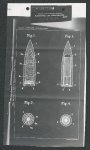
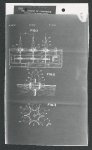
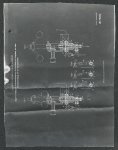
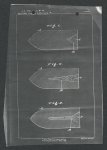
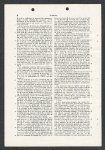
Show Cat 4» S e fig ee EERSTE ij ee N° 4795.—A.D. 1894. Graydon’s Improvements in Charging Explosive Shells. _ explosive, which are supported against displacement under impact by the screwblade virtually dividing ee the length of the charge into independently-supported sections, although the exp osive coils are continuous from énd to end of the charge. The firing spindle is a tube occupying the longitudinal axis of the shell perforated to give passage to the flame and ensure the instantaneous explosion of the whole > mass of the charge, and it may be fired by an electric, time, or percussive contact fuse. ’ Dated this 7th day of March 1894, | J. W. GRAYDON, By A. M. & Wn. Clark, 10 53, Chancery Lane, London, Chartered Patent Agents. I, = es Oe J + = COMPLETE SPECIFICATION. Improvements in Charging Explosive Shells. James Wetr Graynoy, of 32, The Avenue, Bedford Park, Chiswick, in the County of Middlesex, do hereby declare the nature of this invention, and in what manner the same is to be performed, to be particularly described and ascertained in 15. and by the following statement :— . My invention relates to the preparation of the explosive charges for shells and to the charging of shells with what are known as high explosives containing or formed by nitro-glycerine and compounds thereof, and it has for its objects to 20 isolate the explosive material in small quantities and enable it to be handled in large masses with comparative safety in the operation of filling the shell, to ensure the stability of the charge by preventing the exudation and concentration of the- excessive cushioning or massing of the charge towards the base of the shell by the effect of its own inertia at the moment of discharge from the gun and the consequent development of heat, and to obtain the most instantaneous and complete combustion | oc. ~. ic Cr hitro-glycerine in dangerous quantity at any point, to prevent, in long shells, of the whole mass and the greatest possible volume of gases from the explosion, by __ 80 treating the envelope or container of the charge as to render it capable of con- muting to the volume of the gases generated, and assisting in the instantaneous sagation of the combustion throughout the mass of the charge. 3(> /ith a view to accomplish the above mentioned objects, the charge is prepared in the formof saucissons or tubes of about + to 4 an inch diameter and of suitable lengt s which for the purpose of being charged into the shell are coiled spirally in superposed layers about the detonating spindle and between the coils of a screw blade that divide up the length of the charge and support it at all parts in position when the base of the shell is subjected to the impact of the propulsive 35. agent. _ The envelope of the saucisson is made of a strip of canvas which is first saturated with a mixture of nitric acid and water in the proportion of, say, three 40 ey of the former to one part of the latter. The fabric is then thoroughly dried by heat to drive off the water and leave the fabric thoroughly impregnated with nitric acid. The strip of fabric thus rendered explosive, or in a condition to rapidly generate gases by its combustion, is then formed into a tube and filled with the explosive material of the charge (which, as above stated, may be any nitro-glycerine 45 compound, for example dynamite of various grades containing 40 °/,, 60 °/,, or 75 °/., of nitro-ylycerine,) by placing the strip of fabric upon the opened out halves of a split tubular mould of which the two explosive filling material upon halves are hinged together, placing the the strip, closing the mould and clamping it, the edges of the fabric being left protruding from the mould and being then stitched 50 . together by hand sewing to form a complete tube enclosing the charge the operation being performed in convenient lengths corresponding to the length of a _- - ee arm ¥ Ae 2igh OE ee cone + RES” ne ee Wee vt het Biter rs? Ping 2 aa Z “ 3 aa oo ra s a a eas e > . - ~ “ / es+ senj oN " es a 7 - = 3 — : p = | |