| Title |
Browning Arms Company Collection, Box 010, Folder 07 |
| Creator |
Army Times; Marlin Firearms Company; Browning Arms Company; Pierson, W. L.; E. C. Bishop & Son, Incorporated; Savage Arms Corporation; The Sporting Goods Dealer; Williams, Harmon G.; Browning, Val A., 1895-1994; Donovan, William J.; Browning, Bruce W.; Richardson, Lon; Goddard, Grant F.; Blodgett, H. Fred; Browning, John Val; Winchester Repeating Arms Company; Stoeger Arms Corporation; Remington Arms Company; Manufacturas GOAN; Continental Arms Corporation; Doughman, Cliff; Europa Corporation; Salt Lake Tribune (Firm); Fabrica de Armas Ilja; Hand, L. P.; Amuategui, Martin; Godfrey, Dewey; Gun Digest; Dakin, Richard Y.; Dakin Gun Company; O'Rourke, Ken; Franchi Firearms; Boone, J. T.; Beckstead, Richard L.; Etchen, Ruby; Askins, Charles; Garagarza, Miguel; Business Week; Hyland, Philip; Russell, H. C.; Poly Choke Company; Van Houtte, Raymond; Roddenbery, A. C.; Bartlett, B. M.; Cornwell, H. W.; Clark, R. E.; Industrial del Cantabrico, S. A.; Fabrica de Armas de Caza; McFarlane, Charles; Browning, Marriner Bigelow; Wood, D. N.; Browning, Marriner A.; Outdoor Life; Sturm, Ruger & Company; Hampton, Tom; Sports Age; Western Cartridge Company; Drake, A.; Lang, A. K.; Wall Street Journal magazine; San Francisco Gun Exchange |
| Contributors |
Marlin Firearms Company; Dakin Gun Company; Winchester Repeating Arms Company; Krieghoff Drillinge |
| Description |
Exchanges related to advertisements of shotguns produced by Browning's competitors. Includes pamphlets as well as magazine and newspaper clippings of mentioned advertisements. |
| Subject |
Marlin Firearms Company; Firearms industry and trade--United States; Firearms industry and trade--Utah; Browning Arms Company; Business enterprises--Utah--Ogden--History; Winchester Repeating Arms Company; Remington Arms Company |
| Digital Publisher |
Digitized by Special Collections & University Archives, Stewart Library, Weber State University. |
| Date Digital |
2026-05 |
| Date |
1954; 1955; 1956; 1957; 1958 |
| Medium |
correspondence; newspaper clippings; publications (documents); documents; memorandums; magazine clippings; notes (handwritten); financial records; ephemera |
| Spatial Coverage |
St. Louis, Missouri, United States; New Haven, New Haven County, Connecticut, United States; Hamden, New Haven County, Connecticut, United States; Salt Lake City, Salt Lake County, Utah, United States; South Woodstock, Windsor County, Vermont, United States; Liege, Wallonia, Belgium; Evansville, Vanderburgh County, Indiana, United States; Long Island, New York, United States; Ilion, Herkimer County, New York, United States; Eibar, Gipuzkoa, Basque Country, Spain; New York City, New York, United States; Miami, Miami-Dade County, Florida, United States; Germany; Bridgeport, Fairfield County, Connecticut, United States; Goodman, Holmes County, Mississippi, United States; Herstal, Liege, Wallonia, Belgium; San Francisco, San Francisco County, California, United States; Milan, Lombardy, Italy; Ogden, Weber County, Utah, United States; Indianapolis, Marion County, Indiana, United States; Fort Bliss, El Paso County, Texas, United States; Minneapolis, Hennepin County, Minnesota, United States; Hartford, Hartford County, Connecticut, United States; Cairo, Grady County, Georgia, United States; San Sebastian, Gipuzkoa, Basque Country, Spain; Winchester, Clark County, Kentucky, United States; Southport, Fairfield County, Connecticut, United States; Mystic, Appanoose County, Iowa, United States; East Alton, Madison County, Illinois, United States; Springfield, Hampden County, Massachusetts, United States |
| Type |
Text; Image/StillImage |
| Conversion Specifications |
Archived TIFF images were scanned with an Epson Expression 13000XL scanner. Digital images were reformatted in Photoshop. |
| Language |
eng; fra; spa; ita |
| Rights |
Materials may be used for non-profit and educational purposes; please credit Special Collections & University Archives, Stewart Library, Weber State University. For further information:  |
| Sponsorship/Funding |
Funding generously provided by the Val A. Browning Charitable Foundation. |
| Source |
Browning Arms Company Collection, MS492, Box 10, Folder 7, Special Collections & University Archives, Stewart Library, Weber State University. |
| Format |
application/pdf |
| ARK |
ark:/87278/s6s7frjs |
| Setname |
wsu_ba |
| ID |
187271 |
| Reference URL |
https://digital.weber.edu/ark:/87278/s6s7frjs |
| Title |
Page 168 |
| OCR Text |
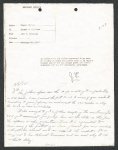
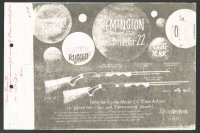
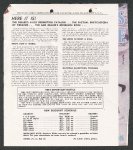
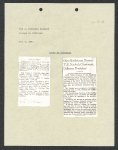
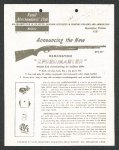
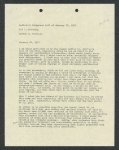
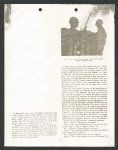
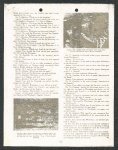
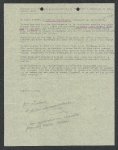
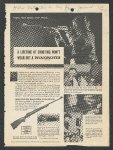
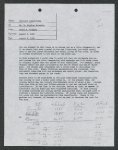
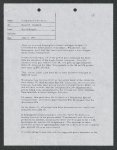
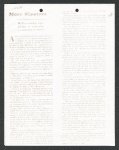
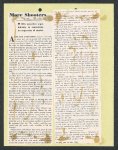
Show (Story starts & 60) ~ probably runs third with about $30-million in annual sales. e Depression =‘Troubles—Winchester and Remington both went through the wringer in the Great Depression, when all recreational spending suffered the same way. Both were rescued by chemical companies that had a stake in supporting the sale of ammunition. In 1931, a predecessor of what is Mew REMINGTON “WoonemacTen” from +124.195" Model 740 tn—— 30-06 caliber now Olin Mathieson, took Winchester out of receiver’s hands for $8.1-million. The gun maker was then attached to the Western ammunition division. In 1933, E. I. du Pont de Nemours & Co., bought control of Remington for similar reasons. Du Pont holds 99% of Remington’s preferred stock, 60% of. the common, has four seats on Rem- speak of shotguns ... ~+» hey agree... when performance, beauty craftsmanship, and vide ‘of ownershi are everything ... the Winchester Model 21 is the only selection possible. No dorid ‘can match it—on an : Het fuMATHS Beet REMINGTON’S advertising plugs down-to-earth features of price and performance— nothing fancy. Ads run chiefly in magazines for outdoorsmen, farmers, boys, dealers. ington’s nine-man board of directors. Both companies were devoted wholly to military work during the war, of course, and both benefited from the huge market expansion after the war (boomed by former GI’s). Despite Korea's diversion of some production into military contracts once more, the two companies grew side by side in the civilian market. e New Chief Executives—In this ex- panding market, production was the key concern of management. That’s one reason why both companies tapped production men for the highest posts two years ago. Warden, with a genius for manufacturing engineering, had designed Remington’s high-speed production processes; at Olin’s Western ammunition division, Hurley had set pro- duction featectad (hE His marks that haven’t been matched since. Hurley’s assignment was to speed the development of Winchester gun designs, get them into production, keep closer control of costs. UlusirGied is o Gyatem Bult Atecdal 21. Aedes! 21 4cs O fe ynished in Field, Macrum. trap or Skeet styles @ ee 21 Has Mechanically intertan me Ga frels .. eflek rigger, igh spel tees! i te: mer and Sr: 212 plece af Winchester Prost ichror iemolvbdanun) Steel, WINCHESTER’S advertising stresses prestige of owning a Winchester, with a bow to quality of workmanship and no emphasis on the retail price. 62 Management In today’s competition, sales have become an equally pressing problem, and both Warden and Hurley have only recently backstopped themselves with marketing specialists at high levels. e Parental Relationship—As part of a division, Winchester stands closer to its parent company than Remington does with du Pont. In fact, Warden is quick to point out that Remington is an independent company. As proof, he says Remington buys more powder for its ammunition from a competitor of du Pont than from du Pont itself. “And, -he-adds:= af swe want: research from du Pont, we have to buy it.” Winchester, on the other hand, highly integrated with Olin Mathiesen. This has some advantages. Olin makes powder and brass for cartridges and has timber to provide wood for gunstocks, though Winchester also buys a lot of walnut on the open market. e Product Lines—Despite their opposite-pole viewpoints, the two companies take pains not to miss each other’s tricks. When Remington went into the powder-actuated tool business a few years ago (these tools use a small cartridge to fire fasteners into concrete and other materials), Winchester responded by buying a company that made a competitive line. Winchester claims its line of guns contains 35% more models than that of Remington, but it admits that many of these are slow sellers. “The price of leadership,” groans Winchester. In the hotter sales numbers, the two companies” have equivalent product lines. Remington has no _ lever-action rifle but Winchester still sells thousands of its Model 94 carbine and its modifications. Remington has a slide-action high-powered rifle that Waunchester hasn’t. But these are exceptions. In ammunition, which accounts for two out of three sales dellars, Wainchester has been swinging more and more to shorter and lighter, high- velocity hunting cartridges. It has just introduced including three of these, a .243-caliber as well as the new NATO size, .308-caliber. Remington wasn’t caught napping. Hearing of what was going on, caliber cartridge it announced at a new almost the .244same time as Winchester’s .243. Actually, Remington doesn’t quite share Winchester’s enthusiasm for the lighter bullets, which get their killing power from velocity rather than mass. But gun writers have been beating the drum for them for some time, and Remington takes no chances. e Market Strategy—Both BUSINESS WEEK companies e¢ Noy. 19, 1955 |
| Format |
application/pdf |
| Setname |
wsu_ba |
| ID |
187439 |
| Reference URL |
https://digital.weber.edu/ark:/87278/s6s7frjs/187439 |