| OCR Text |
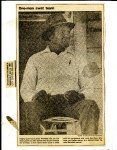
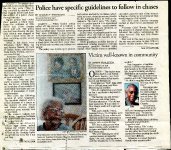
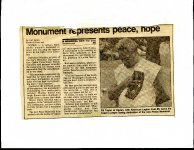
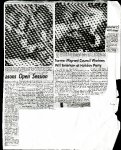
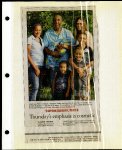
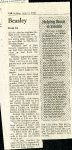
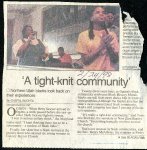
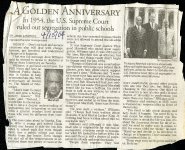
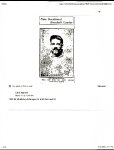
Show OLDEN ANNIVERSARY In 1954, the U.S. Supreme Court LA tuled out segregation in public schools ’ BY JAMIE LAMPROS pba // Standard-Examiner correspondent 5 OF OGDEN — Don’t sit back and assume everyone en '| | else will deal Instead, get involved and change as it happens. — with change. understand That was the message Juan Williams said he wanted to stress to students at Weber State University on Tuesday. Williams, a political contributor for FOX News and host on National Public Radio, was in Ogden to help commemorate the 50th anniversary vs. The of here and give a boring Marshall _ would like to encourage | you to have a deeper understanding of segregation and integration so you can \e a greater comfort level around those who may be different than your: m\\ The case came about in Topeka, Kan- ‘Js, after a young girl named Linda miles day though ~Orown was forced to ride the bus five to school each even _ there was a public school just four blocks from her house. Even though she met ous old man with large eyes behind thick all of the requirements to at- tend and there was plenty of room at the PPOI OT. | The Associated Press Thurgood Marshall (center) is shown with fellow civil rights lawyers George FC. Hayes (left) and James M. Nabrit in, 1954 after the _ hose and a cane,” Williams said. “I want- U.S. Supreme Court declared segregation in public schools unconstitutional. | Post, and Bob Woodward had just writ- more comfortable around other people ten a book that made Thurgood Marshall cation. “I don’t want to stand elf,” “Thurgood Marshall was a cantanker- ed to interview him and write about him. At the time, I worked for the Washington of Edu- history lesson,” Williams said. “Instead, I school. : It was Supreme Court Justice Thurgood Marshall who ended legal segregation, Williams said. It was 1954 and at the time, Marshall was an attorney, but Williams said things really didn’t begin to change until the late 1970s. glasses, gray hair, white elastic support Brown Board school, she was rejected because blacks . were not allowed to attend the all-white sound like he was a buffoon. He didn’t want to talk to any writers, let alone a reporter from the Post.” | Williams eventually got the interview, however, and ended up writing the book, “Thurgood Marshall, American Revolutionary.” “He was such a recluse,” Williams said. “Things had been written about Malcolm X and Martin Luther King Jr. who are like they are, but things are changing in this country. One third of this country is now of color anda deeper ‘degree of diversity is confronting you more than ever before,” Williams said. Williams said students at WSU have a tremendous responsibility in front of them today. “You need to talk about change and help make it happen. You need to be a role model for others around you. The Nothing had been written about this re- Brown case is about the life you live. It’s Williams said although it was MarShall who is responsible for the end of segregation, everyone needs to remem- and we need to make sure it comes to life for every child out there,” he said. “Stand up and decide to be involved in change as it happens. Don’t assume you markable man.” | ber what life looked like before 1954. He also said there is still a degree of segregation in schools and neighborhoods. “People flock together. They feel about the American dream for all of uS, are insulated from it. “Keep your eyes on the prize and hol on. Hold on.” |