| OCR Text |
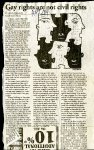
Show | ‘Gay rights BY ALVIN WILLIAMS Knight Ridder/Tribune not civil r ights iy We “TI don’t care what they say; there is no correlation between gay rights and civil rights in terms of what black Americans have gone through.” | These were the poignant words of Ms. Emma White, an 82-year-old black woman, speaking at a forum held by Democratic presidential candidate John Kerry in Jackson, Miss. In the midst of sharing her opinion, White articulated the feelings of many blacks who are opposed to leaders in the gay rights movement invoking comparisons to the civil rights movement. This opposition among blacks cuts across partisan lines with members of the Congressional Black Caucus speaking out recently as well as black conservatives expressing a similar displeasure. But the consensus 1s Emma White of Mississippi was right in her assessment of the issue. As many have stated in their opposition, the civil rights movement and the issues that fostered the need for such a movement are unique and cannot be compared to the battle for gay rights. : When looking at the context of the movement it is important to note that the basic thrust of the movement was to secure the rights that had been denied to blacks since our forced arrival in the Colonies in the early 17th century. For nearly 400 years, blacks were dehumanized in policy and practice and unable to enjoy the basic rights that were afforded to other Americans — the right to vote, the right, to receive a,qu tion, equas \\ Dg able to vote and his educational options would be even more limited as many schools still would see the color of his skin as a barrier to admission. The discrimination and prejudice would continue as this young person now sought gainful employment, which was limited to labor-oriented professions with no benefits to speak of. And if this wasn’t enough, everyday he was peppered with taunts of “boy” and the n-word and would see the dark side of capitalism where business owners accepted their green money but made them sit in the back of the bus or theater because of their black skin. Such was the journey of blacks, which led to the movement over several decades to improve the quality of life to ry aaualit TTV "0 TWNOLLIGAV : because it is focused on securing rights for one group of Americans. It is not a civil rights movement but rather a special rights movement to secure rights for those who have chosen to be defined by their sexual preference. As U.S. Rep. Artur Davis, D-Ala., stated, “The civil rights movement was more of a movement for the equal rights of all Americans: education, voting rights, jobs.” The civil rights movement that gay rights leaders: (and like-minded lawmak- | ers) compare their efforts to sought to benefit all who by virtue of non-deniable aspects of their being — race, color, creed and sex — were mistreated and discriminated against. Thanks to the words of a concerned citizen in Missis- sippi the nation was made -4y90] &@ — Aqeq e Suionpoad JO Sppo 94} dAOA1dUIT 0] BDU0 Je QUIOM ot] Ul SOAIQUIO [eJOAdS eoujd Ajeutnor s.10}00q ‘$jsossns Apnjs e ‘Jueusoid uemOM ke oyeu oO} Jdw9}e yoee suLinp soAIquia JOM suueldunt ore s10jo0p asned -oq Ajesaey ‘sutseo st Asojou -Y99] 9QN}-}$9} 0] poyuT] syy.q gjdyjnur ul osans yeuorneu _~ a raw = — |