| Title |
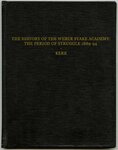
The History of the Weber Stake Academy: the Period of Struggle 1889-1894 |
| Creator |
Kerr, Walter A. |
| Contributors |
Weber College, Publisher |
| Description |
Weber Stake Academy first opened its doors for instruction at the LDS Second Ward Meeting House on the corner of 26th Street and Grant Avenue on January 7, 1889. The academy's two teachers, Louis F. Moench and Edwin Cutler, welcomed nearly one hundred students on the first day, and, by the end of its first term, 195 students in all had registered for the school. This monograph depicts the role the LDS church and its leaders played in founding the school, the background of its first educators and administrators and the financial challenges they confronted in operating the school from 1889 through 1894. Letters of appreciation for Louis F. Moench and a bibliography of primary sources are also provided. |
| Subject |
Weber Stake Academy--History; Weber Stake Academy--Publication of proceedings; Higher education and state |
| Digital Publisher |
Stewart Library, Weber State University, Ogden, Utah, USA |
| Date Original |
1953 |
| Date |
1953 |
| Date Digital |
2015 |
| Temporal Coverage |
1888; 1889; 1890; 1891; 1892; 1893; 1894 |
| Item Size |
8.75 inch x 11.25 inch |
| Medium |
books |
| Item Description |
75 page book with a black cover with gold lettering |
| Spatial Coverage |
Ogden, Weber County, Utah, United States, http://sws.geonames.org/11788968, 41.22809, -111.96766 |
| Type |
Text |
| Conversion Specifications |
Archived TIFF images were scanned with an Epson Expression 10000XL scanner. OCR by ABBYY Reader. JPG and PDF files were then created for general use. |
| Language |
eng |
| Rights |
Materials may be used for non-profit and educational purposes; please credit University Archives, Stewart Library, Weber State University. |
| Source |
LC361.K4 1953 Weber State University Archives |
| Format |
application/pdf |
| ARK |
ark:/87278/s6eb2t13 |
| Setname |
wsu_hp |
| ID |
105722 |
| Reference URL |
https://digital.weber.edu/ark:/87278/s6eb2t13 |
| Title |
Page 70 |
| Creator |
Kerr, Walter A. |
| Contributors |
Weber College, Publisher |
| Description |
Weber Stake Academy first opened its doors for instruction at the LDS Second Ward Meeting House on the corner of 26th Street and Grant Avenue on January 7, 1889. The academy's two teachers, Louis F. Moench and Edwin Cutler, welcomed nearly one hundred students on the first day, and, by the end of its first term, 195 students in all had registered for the school. This monograph depicts the role the LDS church and its leaders played in founding the school, the background of its first educators and administrators and the financial challenges they confronted in operating the school from 1889 through 1894. Letters of appreciation for Louis F. Moench and a bibliography of primary sources are also provided. |
| Subject |
Weber Stake Academy--History; Weber Stake Academy--Publication of proceedings; Higher education and state |
| Digital Publisher |
Stewart Library, Weber State University |
| Date Original |
1953 |
| Date |
1953 |
| Date Digital |
2015 |
| Temporal Coverage |
1889-1895 |
| Item Description |
8.75 x 11.25 in. hardback. Pages number 1-75. |
| Spatial Coverage |
Ogden, Weber County, Utah, United States, http://sws.geonames.org/11788968, 41.22809, -111.96766 |
| Type |
Text |
| Conversion Specifications |
Archived TIFF images were scanned at 400 dpi with an Epson Expression 10000XL scanner. OCR done with ABBYY Reader. JPG and PDF files were created for general use. |
| Language |
eng |
| Rights |
Materials may be used for non-profit and educational purposes; please credit University Archives, Stewart Library, Weber State University. |
| Source |
Archives LC361.K4 1953 |
| OCR Text |
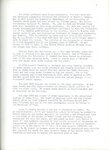
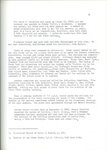
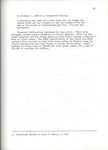
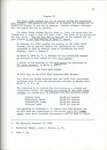
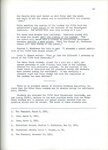
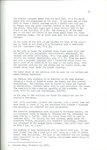
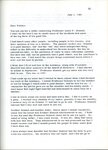
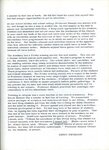
Show 70 a master in that line of work. He did that work for many like myself who had had meager opportunities to get an education. At our school holiday and school outings Professor Moench was always with us, and though he was a man in middle life, he was usually in the lead in games and recreational activities, a thing much appreciated by his students. Football and basketball had not yet came into the Academies of the Church to over-work one tenth of the boys and leave nine tenths of the student body with no recreation except the exercise of their vocal organs in school yells. Recreations were programmed for us in which we could all be active and on the level. Our teacher planned such activities because of the opportunities they offered for informal contact where he could learn to know the individual students better. Students enjoyed these games and recreations because all were active. The Academy had a Friday evening society that met weekly. This was not a lyceum lecture course quite popular now. We had a program in which we, the students, were the actors. Our school choir, our quartettes, and our budding soloists sang; young scientists demonstrated to the audience by means of experiments; poetry and drama were recited by students in those lines; choice selections of literature were read; and art exhibited. These programs were usually before full audiences. Parents of the students and friends attended. The Friday evening society was a means in the hands of Professor Moench of wearing away stage-fright, awkwardness, and self-consciousness on the part of the students. It helped the students to develop confidence in their ability to appear properly before public gatherings. In our present day we hear and read much about human personality and its training in our schools. Professor Moench practiced that seemingly subconsciously in all his educational work. Training in religion was a main function in our church academies. Professor Moench was a master in that line of training. We memorized choice passages of scripture and underscored them in our Bibles. Probably the best thing students got from the study was a liking for Bible literature and the habit of reading it. Prayer opened and closed our day's activities. Students participated in that. We had long lists of the names of students, who, by signing the lists signified their willingness to pray in public. That was one of the best lines in which we were trained in the academy by our great teacher. Great men appreciate the power of prayer. President Lincoln said: "Without the assistance of that Divine Being who attends me I cannot succeed; with that assistance I cannot fail." (Under-score mine.) Dr. Alexis Carrel said: "Prayer, our deepest source of power and perfection, has been left miserably undeveloped." Professor Moench trained us, his students, in prayer. HENRY PETERSON |
| Format |
application/pdf |
| Setname |
wsu_hp |
| ID |
106079 |
| Reference URL |
https://digital.weber.edu/ark:/87278/s6eb2t13/106079 |