| OCR Text |
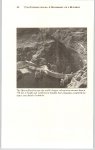
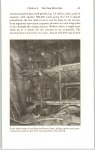
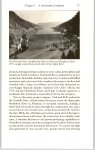
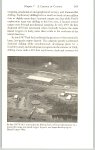
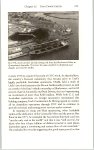
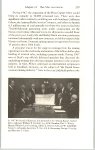
Show Chapter 4 THe DAM BUILDERS 53 benefitting each state’s agricultural development. As a by-product, the compact would minimize future controversies over water allocation and flood damage. Seven years later, when Arizona refused to agree to the Colorado River Compact, President Calvin Coolidge signed the Swing-Johnson Act, inaugurating a study that quickly recommended building a massive dam for flood control, power generation, and water storage. The Bureau of Reclamation chose Black Canyon, on the Arizona-Nevada border some thirty miles from Las Vegas, as the site for the new dam, because it was located near irrigable lands and would provide a firm bedrock foundation. At that point, the Colorado had cut a sheer gorge eight hundred feet deep and one thousand feet across through desert country that baked in 100-plus degrees much of the year. When the bureau advertised for bids in December 1930, few doubted that the job would be incredibly difficult. After all, said skeptical observers, this would be the eighth wonder of the world. It might not be done at all, at least not with a profit. As soon as the Wattises and their long-time friend and vice president Andrew H. Christensen heard about the proposed high dam on the Colorado, they followed every development with interest. W. H. seemed to believe that Utah and Morrison Knudsen could build Boulder Dam just as they had constructed the Guernsey and Deadwood Dams. “This is just a dam,” he told Time magazine in an interview published on March 23, 1931. “It’s no different than any other dam.... There’s just more of it, that’s all.” But M-K’s chief ramrod, a battle-hardened Bureau of Reclamation veteran named Frank T. Crowe, looked at preliminary specifications and concluded the dam could cost as much as $50 million—a sum far too large for the two companies to finance together. Harry Morrison agreed with Crowe and apparently tried to convince E. O. to invite in additional partners. W. H. remained skeptical. “If we can’t do the job alone,” he swore, “to hell with it.” He believed that Utah could raise the necessary capital by drawing on a resource peripheral to its construction enterprise—the company’s large ranching operation. In 1913, David Eccles had purchased property located in the northeast corner of Nevada from Jasper Harrell, successor to the |