| OCR Text |
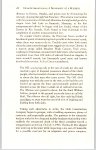
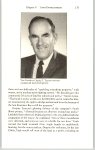
Show 284 UTAH INTERNATIONAL: A BIOGRAPHY OF A BUSINESS working at a high level reporting to me who hasn’t made some mistakes, because if they haven’t made mistakes, they haven’t taken any chances.” Executives had to be principled and exemplary because Utah was the kind of company that simply did not participate in inappropriate conduct, such as “improper payments and that sort of thing.” Littlefield believed that all Utah employees could take pride in the firm’s corporate ethics. He acknowledged that this kind of integrity “cost us something, but the rewards have been most satisfying.” Due to all of these characteristics, GE found Utah attractive indeed, and after detail work that lasted through much of 1976, the two giant corporations merged in December of that year. The union enhanced dramatically Utah International’s already legendary achievements in the mining and heavy construction industries, as innumerable shares of GE stock now made many a millionaire, built many a university building, and endowed many a foundation. For instance, in the state of Utah, the Eccles foundations benefitted substantially from the Utah International/General Electric merger. GE stock “remains the largest single source of the Eccles family wealth,” according to a Salt Lake Tribune article (June 27, 1999). Similarly, GE reigned supreme in most of the industries it occupied, providing similar financial rewards for its shareholders. The two firms were well matched in terms of accomplishments and reputations. For precisely these reasons, the United States Justice Department’s anti-trust division prepared to scrutinize the merger petitions, arriving after the boards of both companies approved action to negotiate an agreement in simultaneous meetings on December 15, 1975. Within the month, business commentators began to speculate. An article in the San Francisco Chronicle on January 11, 1976, focused on the economic and _ federal jurisdictional issues which shadowed the intended merger. In essence, the Justice Department could block the alliance if, in the government’s opinion, “it substantially lessened competition,” by the provisions of the Clayton Act (1914). To prove such a circumstance, the government would argue against two types of mergers. The first was horizontal—a company acquiring its |