| OCR Text |
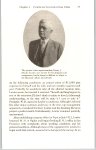
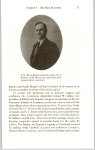
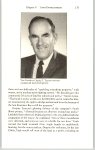
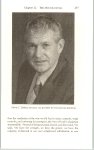
Show Chapter 13 MERGER 275 A more promising alternative was to diversify by merging with an already diversified company large enough to digest a $2 billion bite, which was Utah’s market value as determined by share price, times the number of shares outstanding. This condition narrowed the field considerably. “I came out with four companies that I thought were probables—and that’s all,” said Littlefield. At the head of the list was General Electric Company, which, Littlefield said, “appeared by all odds the most attractive merger partner that we could seek.” As Utah’s executives pondered a possible alliance with GE, Littlefield was not sure how the “old line shareholders” would respond, “because one of the things about Utah, there has always been a sentimental feeling about the company, and nowhere has it been as bad as in my family.” Littlefield was particularly concerned about how Marriner S. Eccles and George S. Eccles would react to his plan, since they were part of the original shareholder families. He need not have worried. “Both George and Marriner thought this was a stroke of genius,” Littlefield related. “I think everybody recognized that, from a standpoint of all those concerned, this was a great idea.” He was convinced that “the only people that had any real opposition to it ... would be the brokers and others, who didn’t like the idea of an independent vehicle disappearing.” As word of the initiative got around, some key employees and a few shareholders resisted the idea of a merger, but Utah director Ernest Arbuckle grasped the point immediately and exemplified the more common reaction: “The merger was important in the defense of family interests.” Even more importantly, he described the attitude of General Electric officials as “most remarkable in regard to leaving in place an existing company organization: you run your own business.” From its perspective, GE found Utah a most attractive suitor. Out of the fifteen hundred companies listed on the New York Stock Exchange, it was one of only eighty-three enjoying a decade of uninterrupted earnings growth. Standard and Poor’s Outlook declared 1975 “an especially rough year for U.S. corporations, with overall after-tax profits declining about 17 percent.... In contrast, Utah’s 1975 earnings rose 14 percent.” Naturally, this rate had not been steady over Utah’s history, although earnings had improved as Utah phased out of |