| OCR Text |
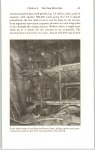
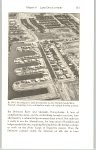
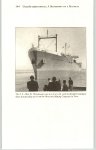
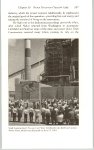
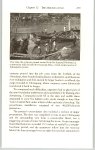
Show Chapter9 THE PERUVIAN OpysSsEY 163 in 1968 of the company’s patented slurry process that simplified handling and transporting iron ore. The process, called “Marconaflo,” propelled dry, compacted stationary material through conduits with rotating water jets into pipelines that efficiently delivered the material to waiting ships. By the early 1970s, the application of the Marconaflo process had advanced sufficiently to permit the on- and off-loading of giant vessels a mile or so offshore. This ability enabled the company to purchase three “Vanguard”-class cargo ships of 130,000 dwt each after it sold the aging 32,000-dwt each Mudd and Christensen in 1968. Shipbuilders constructed these colossal vessels to haul both ore and petroleum, and especially to handle Marcona’s pellet and slurry products. As the physical plant and technical face of the company changed, so did the structure of the business. In November 1965, the Marcona group reorganized into the Marcona Corporation, which consolidated the ownership and management of the Marcona Mining Company; Cia. San Juan; and San Juan Carriers, Ltd., with voting stock distributed fifty-fifty between Utah and Cyprus. At the same time, Utah acquired an additional 3 percent in class B stock, the basis for profit distribution, equalizing its holdings with Cyprus at 46 percent. The Allen D. Christensen interests retained the remaining 8 percent of class B stock. The Marcona Corporation subsequently established two wholly owned marketing subsidiaries, Marcona, Inc., with offices in New York and Tokyo, and Marcona Europe, Ltd., in London. These entities assumed exclusive responsibility for coordinating respective marketing activities in the United States, Japan, and Europe. In 1968, another subsidiary, Marcona Finance, S. A. (Marfin), incorporated in Luxembourg to aid borrowing for expansion programs. This corporate reshaping improved efficiency by consolidating operations, investing authority in a single board of directors to streamline the decision-making process, and establishing efficient management groups with specialized expertise in administering diversified interests. Marfin, for example, made capital requirements easier to secure and allocate. For another, permanent institutional brokers now handled functions in key countries such as Japan. |