| OCR Text |
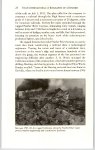
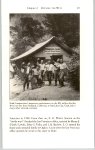
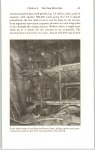
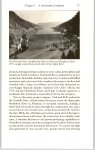
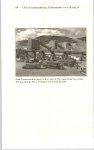
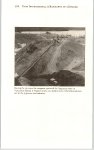
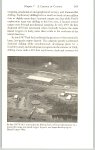
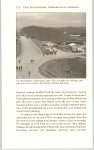
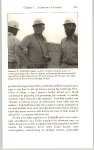
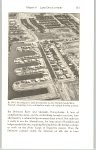
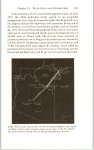
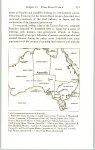
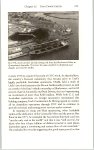
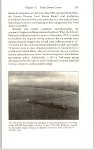
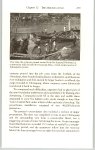
Show EY REST UtraH Down UNDER 213 Located midway between Sydney and Melbourne, the Snowy Mountains Hydroelectric Scheme envisioned a_ billion-dollar complex of dams, tunnels, and powerhouses to channel Snowy River waters across the Great Dividing Range into the drier Murray-Murrumbidgee drainage. A central three-million-acre-foot reservoir at Lake Eucumbene would provide storage and regulation while the Snowy-Tumut Tunnel took water from the Eucumbene to the upper reaches of the Murrumbidgee tributary of the Tumut River, and the Snowy-Murray section delivered water to the upper Murray. Surveying the proposed project, the American Society of Engineers marveled at its scope and named it “one of the five future wonders of the world.” Utah’s involvement in the Snowy Mountains near the decade’s end in May project started 1958 when it sponsored a joint venture of UAL and Brown and Root Sudamerica, Ltd., to take a $16 million contract for the construction of Tantangara Dam and the Murrumbidgee-Eucumbene Tunnel. Working with speed and against adverse climatic conditions, the combine finished the fifteen-story mass gravity concrete dam six months ahead of schedule and the ten-mile tunnel five months early, in February 1961. Tunnel crews, driving in a horseshoe-shaped pattern from only two headings, established a world record of 590 feet in a sixday week. The Murrumbidgee-Eucumbene Tunnel equaled in length a highway from downtown San Francisco to San Mateo, California. Along with the Snowy Mountain project, in 1959 UAL completed in less than a month a fourteen-acre sports ground for employees of General Motors—Holden in Victoria, preparing sites for a cricket pitch, a running track, a football field, five tennis and three basketball courts, and a bowling green. On a more technical project, UAL also finished that year a facility for the first commercial use in Australia of radioactive isotopes for sterilizing aN aa iad dh al Se eh ESB a i a industrial raw materials. Also located in Victoria, the $225,000 project called for precision engineering in constructing a large building, an isotope block house with six-foot-thick walls and roof, a stainless steel, concrete-encased underground tank to house the isotope source tubes, and an intricate system of instrumentation and automatic controls. FSET NNR gale SE Sos hia hale ii is Soa tenes ies eae ae ee rae Tees sag ag te Se nips an eles ee Chapter 11 |