| OCR Text |
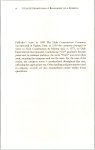
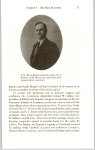
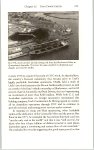
Show Chapter 12 THE MULTINATIONAL 267 division accounted for more than 60 percent of Utah’s gross revenues, 48 percent of its salaried employees, and 69 percent of the company’s total payroll. Despite this dominance it was clear that for mining to achieve its potential, Utah would have to get out of the construction business. In searching for a purchaser, Littlefield contacted Paul Davies, who represented Lehman Brothers of New York City and was also a retired chief executive officer of Food Machinery Corporation. Littlefield and Davies finally approached Fluor Corporation of Newport Beach, California, and the two companies moved swiftly through the usual preliminaries. The dredges were part of the original deal with Fluor, but it backed away, for dredging seemed irrelevant to the conventional construction business. Articles in such business publications as the Wall Street Journal, Business Week, and Fortune congratulated Utah on its sense of timing. Selling the construction division would allow the mining program to expand on every front, assuring future earnings for the company through its sizeable backlog of mineral sales. And fortunately, Littlefield related, “all of the people in our construction business either were able to go with the buyer of that business or to stay with Utah, so no one lost their job.” In the Utah Report, Littlefield described the year’s significance, not only due to record earnings and the sale of its construction division, but also because Utah had increased its mineral backlog. “The amount of new business put on the books,” he said, “was the greatest in our history and underwrites our future prosperity for many years to come.” Highlights of the year included the sale of additional uranium totaling approximately $26 million, the negotiations for the output of 90 percent of the Island Copper production on a favorable basis, and the extension of the Colorado Fuel and Iron (CF&I) contract. As the year ended, the mineral sales backlog stood at $1.1 billion, virtually all of it protected by priceescalation agreements. Despite some inevitable worries in the market sector, Utah management in its 1969 year-end summary dropped its traditional inhibitions to state without reservation: “We are truly taking giant strides forward to become one of the major mining companies in the United States and indeed the world.” |