| OCR Text |
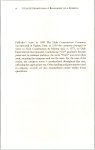
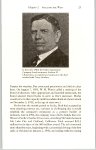
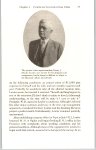
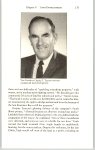
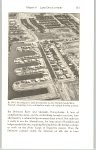
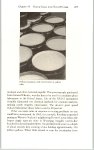
Show Chapter 9 THE PERUVIAN ODYSSEY iff $25 million for plant expansion and the general upgrading of its mining operation. This would increase Marcona’s grinding, magnetic concentrate, and pelletizing capacity, enlarge its storage facilities, and expand its ship-loading ability for both dry and slurry products. “This agreement,” Robinson told the press, “reaffirms our confidence in the continuation of a satisfactory working relationship in Peru. Marcona will continue to appraise further opportunities for expansion in the country, based on a continuation of the government’s support of private investment.” As it had done for some time, however, Marcona continued to bolster its potential earnings outside Peru. Hoping to stabilize its position by drafting Lima directly into its operation, Marcona sought the first of several preemptive accords in 1971. Drawing on its earlier deal with Santa for the 1982 beginning of a joint Marcona-Peru mining venture, the firm offered Lima an immediate opportunity to purchase 25 percent of the equity. In a letter to the Lehman Brothers investment firm, Albert Reeves, senior vice president of the parent company, now Utah International, Inc., described the proposed partnership as “an intellectual, diplomatic move.” Velasco considered but rejected the offer, apparently because of the government’s minority standing in the arrangement. Such a decision seemed shortsighted, given that Marcona’s consolidated earnings in 1971 exceeded the previous year’s $25 million mark by $9 million. Because of labor difficulties and the cancellation of a lucrative Japanese contract (due to stringent anti-pollution laws), earnings from mining operations dropped while other subsidiaries posted higher profits. The overall $34 million resulted largely from the continuing profitability of shipping. Set upon “diversifying political risk,” as the 1971 operations report termed it, Marcona now expanded into additional countries and regions. In Greenland, Marcona signed a fifty-fifty joint mining agreement with the Danish Cryolite Company to exploit the ISUA iron ore deposits at Godthab Fjord. Dramatizing the company’s new perspective, “political stability” had played a major role in the decision to proceed. This joint venture, however, never materialized. Using the same criteria, Marcona also undertook a joint venture with S. A. Mineracao de Trinidade (Samitri), a Brazilian ore |