| OCR Text |
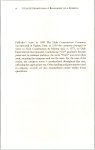
Show Chapter9 THE PERUVIAN ODYSSEY 147 In early 1952, Christensen found Peruvian officials willing to consider a Utah proposal if it promised sufficient revenue for the state and ensured that Peru retained (in a reserve agreement or setaside clause) some of the raw ore for domestic use. Not wishing to rush into an agreement until testing could evaluate the volume and grade of the Marcona ore, the company determined to ascertain precisely the feasibility of a large-scale operation in Peru. After much caution on both sides, representatives of the company and the government reached a tentative accord in February 1952. The preliminary agreement authorized Utah to dispatch engineers and geologists to the region to undertake drilling and survey tests to determine the potential of the range and to assess the potential of nearby San Juan Bay as a shipping site. If the company’s findings came up favorable, Lima promised it the right to exercise a concession option to undertake operations for a period of twentyone years. When, and if, Utah exercised its option, the company would pay Lima a 7 percent royalty on exported ore. Also, it would be obliged to deliver, at 25 percent of market value, a specified annual tonnage of ore to the Chimbote steel works and to leave a stipulated quantity of ore in the ground for future extraction. The company had only until December 1952 to complete its surveys and exercise the concession option. Accordingly, that spring Utah wasted no time dispatching a team of experts to the region. Early testing determined the commercial quality of the ore and that San Juan Bay could indeed serve as a good port facility. Once engineers assessed the volume of ore to be sufficient, Christensen began to take steps to ensure that adequate capitalization existed and to secure an immediate market for the ore. To enlarge Utah’s capital pool he successfully negotiated a $2.5 million Export-Import Bank loan. He then signed an agreement with United States Steel Corporation for the delivery of four million tons of Marcona ore. The latter step amounted to something of a gamble, inasmuch as Utah initially expected to plow large amounts of capital into the Peruvian operation and therefore needed all the short-term revenue it could muster. But the contract with U. S. Steel was good only until that company’s own Venezuelan fields came on line in 1953. So Utah had only a matter of months to begin extracting and transporting ore. |