| OCR Text |
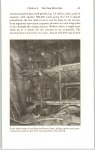
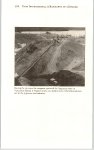
Show 74. UTAH INTERNATIONAL: A BIOGRAPHY OF A BUSINESS the Niles-San Jose branch in California. For the Utah Copper Company’s Bingham and Garfield Railroad, Utah Construction extended mining dump lines and tunnels and built bridges, tunnels, piers, and railroad lines. Another mining client, the Union Pacific Coal Company, hired Utah to finish air shafts and entrance slopes in Wyoming. Other projects included building a jetty off the coast of Washington State, erecting three bridges in California, and digging eight water-project canals and tunnels in Utah, Wyoming, California, and Colorado, as well as the Moffat Project for the Denver Municipal Water Works, the West Iron Mountain Water Tunnel, and the Los Angeles Aqueduct for the Metropolitan Water District of Southern California. An important step outside the region came in 1938, when Utah formed a joint-venture partnership with three other firms to construct an $11 million, seven-mile portion of the Delaware Aqueduct, an eighty-five-mile pressure tunnel to augment New York City’s water supply. The partners installed access shafts and appurtenant fixtures on the tunnel as it ran between three to fifteen hundred feet under the surface, often below sea level. Measuring twenty feet at its outside diameter and fifteen feet at the interior, the tunnel required a two-and-one-half-foot reinforced concrete lining to deliver water from the upper tributaries of the Delaware River. At least the men and women selling apples and pencils on the poverty-ridden streets of New York would not go thirsty. After nearly a decade of such public works projects, Utah Construction and most of the country were still struggling to find their way in the new world the Depression had created. Elsewhere, worldwide economic chaos had unleashed a whirlwind of revolutions. In Europe, Adolf Hitler and his National Socialists charted aggression and ethnic cleansing as ways to regain the eminence Germany had lost in the Great War, while Benito Mussolini promised the Italians new glory and security in the fascist deification of brute force. Half a world away, militarists in Japan adopted imperialism as the means to make the sun rise for their nation. By the end of the 1930s, World War II had engulfed much of the planet. In response, President Franklin D. Roosevelt called on America to become “the arsenal of democracy” against totalitarianism. |