| OCR Text |
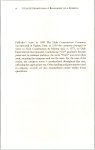
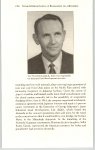
Show 96 UTAH INTERNATIONAL: A BIOGRAPHY OF A BUSINESS $10,000. The company also paid incentive bonuses annually to top management. The board meeting became an ordeal Littlefield would never forget. It took a full, laborious day for the board to extract the necessary information from senior management about the projects at hand. Littlefield later remembered that “finally, the second day, they ... approved the various actions.” He also observed that Christensen, in seeking board approval for the Argonaut iron ore mine project, for instance, made a completely verbal presentation; none of the board members “saw a thing” on paper. Littlefield needed no clearer demonstration of why the board was dissatisfied with senior management’s communication. Littlefield spent the next week mapping his strategy before formally reporting for duty on April 1. Before the next quarterly board meeting convened in June, he put into the hands of each board member a comprehensive, relevant summation of the state of OUTLOOK, which he hoped the company titled COMMENT and would lead to more prudent decision making. Detailed, factual, and timely, the report impressed everyone. As one family member said, Littlefield “provided more information than has been or perhaps will be given to any board in the United States.” Believing that such written communication between management and the board would ease strained relationships and clarify decision-making, Littlefield went on to overhaul the entire reporting system, requesting that any important action be reported in writing. In keeping with this philosophy, Littlefield also insisted that scrupulous records be kept on every project. For example, just after his arrival in April 1951, management faced increased costs on two projects—a dam on the Lower Bear River southeast of Sacramento for Pacific Gas and Electric, and the Argonaut mine in British Columbia. Christensen brushed off these concerns, saying these projects had just begun, and higher costs were to be expected. In contrast, Littlefield encouraged Christensen to “look into the numbers,” to study thoroughly the information available on revenues, historical costs, amounts invested, and the projected costs. He particularly urged a review in the context of the larger and more detailed financial picture that was causing the cost overruns. Not only did he introduce many fresh and original ideas, but he implemented what he considered to be conventional business |