| OCR Text |
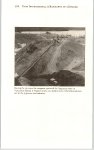
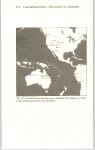
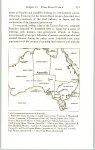
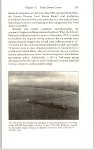
Show Chapter 11 UtaH Down UNDER 217 country” and decided to run a geologic-economic feasibility study on Mount Goldsworthy, a site on Australia’s northwestern coast that had seen the fabulous gold-mining region of Pilbara develop. The young geologist was convinced that Pilbara, and especially Mount Goldsworthy, held large deposits, the area consisting of “Pre-Cambrian rocks ... in which banded iron formations (jaspilites) are particularly thick and extensive.” Such deposits resulted from “prolonged downward percolation of surface water through permeable parts of the banded iron formation,” thus leaching out the silica and depositing iron oxide in its place to form concentrations of iron ore. Ellett identified three main areas he believed would yield at least ten years of production if developed sequentially. He was wrong, but in a positive direction—his estimate was far too conservative. Utah invited in its Marcona partner Cyprus Mines, as well as Gold Fields Mining and Industrial, Ltd., of London and New York. Known as the Mount Goldsworthy Mining Associates (MGMA), the consortium began preliminary negotiations with the Western Australian government, which, in December 1960, lifted its limited embargo on iron ore development within the state. Following Ellett’s study, the partners inaugurated an extensive prospecting program in the area some six months later, hoping to locate more potential sites. Then, in September 1961, MGMA madea successful offer to the State of Western Australia to mine the Mount Goldsworthy deposits. The group announced early in 1962 its intention of beginning a $675,000, eighteen-month program to assess the potential of the ore field and the product’s marketability as well as surveying for rail, road, harbor, and living facilities. Predicting an annual production of one (later two) million tons, MGMaA anticipated at that point a seed investment of some $22 million, with production commencing within four years. Next, Ellett and Bourret turned their attention to coal, in response to Allen D. Christensen’s ongoing interest in exploitable coalfields on the Pacific Rim. After considering briefly an operation in the established New South Wales coalfields, they settled on a relatively undeveloped area in the northwestern state of Queensland. “One must admire their vision and optimism,” wrote one Australian observer. “Few Australians in the early 1960s saw a |