| OCR Text |
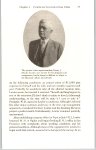
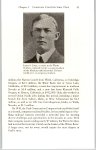
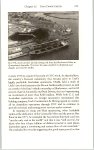
Show Chapter 4 THE DAM BUILDERS 63 precarious heights took an additional toll in human life and injury. Despite such casualties amid rugged and hazardous conditions, the government continually complimented Six Companies on its tireless safety efforts. In a way of thinking, another casualty related to the project came on February 2, 1934, when Edmund Orson Wattis died suddenly in Ogden of a heart attack. Also passing during the Hoover Dam project were Andrew H. Christensen (1932), a close friend and confidant of the Wattis brothers almost from Utah’s beginnings, and crusty Henry J. Lawler, who died in 1935. The Hoover Dam became their legacy of ingenuity and determination. On September 30, 1935, President Franklin D. Roosevelt dedicated the massive dam in cadences reminiscent “of Deuteronomy and the triumphant prescription for the Promised Land,” as television commentator Alistair Cooke later put it. Under tough Frank Crowe, the combine cut two years from the government’s timetable. The Department of Interior accepted the structure as complete on March 1, 1936, three days short of five years from the opening of bids. When the hot dust of Black Canyon settled, Six Companies’ profit after taxes came to $10.4 million. That outcome was not accidental. In preparing its original bid, Six Companies had cut everything to the bone except anticipated excavation costs, which it inflated. As E. O.’s grandson Edmund Wattis Littlefield explained: What Six Companies did was to “unbalance the bid,” which means that it had a higher markup on some of the work items and a lower markup on others in contrast to spreading the estimated profit evenly throughout the work items. Unbalanced bids are not uncommon and were used here in order to gain the profits in the early part of the job to alleviate the need for additional capital which would have strained the resources of all the partners. This strategy paid substantial dividends, inasmuch as the tunnel excavation was finished early in 1932, capturing perhaps as much as $6 million in profits the first year and returning the total invested capital plus net earnings of $1 million. Also, Crowe’s expertise |