| OCR Text |
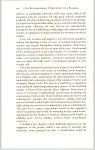
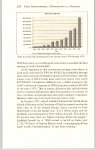
Show 270 UvTAH INTERNATIONAL: A BIOGRAPHY OF A BUSINESS accurately the present geographic scope of Utah’s ... operations and the international character of its business.” Just a few months prior to the name change, both Fortune and Forbes saluted the company’s excellent record in their annual ratings of American business corporations. “Good news about profits was relatively scarce for the companies on the [second 500] list,” the Fortune editors observed. “Perhaps the most profitable company was Utah Construction & Mining Company ... that ranked first in return on sales, with a margin of 33.3 percent, and also had the highest income, $30 million.” The firm took a long stride forward in the early 1970s by acquiring Ladd Petroleum Company in November 1974. As J. B. Ladd noted in an address to Ladd shareholders in June 1974, “Natural gas and crude oil are in particularly short supply,” and this acquisition reinforced Utah’s profit. Only a few months later in 1975, Utah brought Clarcan Petroleum and LVO Corporation into a its family of subsidiaries. These developments brought Utah to higher level in a company-maintained ranking of the twenty-five top mining firms in the United States. In 1968, Utah ranked seventeenth; in 1972, eighth; and in early 1976, third. It was soon to be number one. During this period the price of coking coal shot through the roof, due to a worldwide shortage that was expected to last well into the eighties. These windfalls increased company profits by $27 million in 1974 and $52 million in 1975. “This would be fourteen times the earning level of ten years ago,” reported management, with earnings of $100 million or $3.30 a share possible. Utah International reported a net profit of first $96,941,000 in 1974, which exceeded the entire earnings in the sixty-four years of Utah’s history. The gain of more than $41 million was greater than the entire earnings of any single year in Utah’s history except 1973. Littlefield remembered when the price of coking coal was a meager $11 to $15 per ton. Then “all of a sudden it was $50 a ton and these mines became much more profitable than we anticipated.” The jumbled background of ever-changing prices created an erratic picture of 1975 earnings from Utah International’s various subsidiaries and joint ventures, complicated by uncontrollable foreign waves of anti-U.S./big business sentiment. For multination- |