| OCR Text |
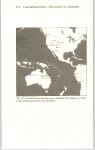
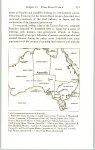
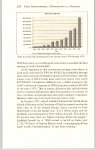
Show 164 UTAH INTERNATIONAL: A BIOGRAPHY OF A BUSINESS Although operations management remained in Peru, the new Marcona Corporation began to operate in Australia, Chile, and New Zealand. It gained the exclusive right in 1966 to transport and market iron ore from the important Mount Goldsworthy concession in western Australia, which by 1970 accounted for approximately 40 percent of the corporation’s iron ore sales. In Chile, the company purchased 74 percent (later increased to 76 percent) of Compania Minera Santa Adriana, S. A. (COMISA), a salt-mining operation. In New Zealand, it received the right to begin iron-ore exploration and testing activities on the North Island, backed by Japanese banks. At the same time, it began joint exploratory probes in Alaska, the Bahamas, and in India’s Kudremukh Range. All these diversification projects reflected both Marcona’s improving capital reserves and its uncertainty about Peruvian politics. So Marcona’s fortunes rose dramatically in the first half of its second decade, as 1963’s overall after-tax earnings of around $9 million in 1963 more than doubled to $18.5 million by 1968. (Unusually, Marcona mining in 1968 earned more than San Juan Carriers. In fact, between 1966-70, Marcona mining averaged net profits of $7.4 million annually while San Juan Carriers averaged $12 million, or 60 percent of Marcona’s total net income during the period.) “If, in fact, Marcona is [therefore] changing from a mining company with shipping as an ancillary operation,” Robinson wondered in a 1970 memorandum, “to a full-fledged shipping company with mining as an ancillary operation, then we must begin exercising our imaginations.” He urged careful planning as the company weaned itself from a long dependence on official Peruvian goodwill, but for the moment Marcona’s highly vulnerable position forced it to continue to seek positive relations with Peru while simultaneously diversifying its outside earning potential. While company fortunes had thus prospered, the background noise of radical agitation had risen in a steady crescendo. Since Belaunde’s election in 1963, IPC continued to attract much of the flack as Peruvian nationalists repeatedly characterized the Standard Oil (NJ) subsidiary as a villainous foreign leech, sucking the oil of Pern while leaving few benefits behind. While IPC thus diverted attention from other foreign extraction companies, it did not take |