| OCR Text |
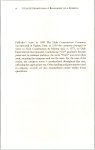
Show 158 UtvAH INTERNATIONAL: A BIOGRAPHY OF A BUSINESS Democratic party and the reactionary National Union (odrista) party paid lip service to the need for a transformation in Peruvian society, although modern Peruvian reform sentiment clearly stemmed from theories that Victor Ratl Haya de la Torre formulated during the 1920s. Exiled from Peru for anti-government agitation in 1923, he founded a political movement called Alianza Popular Revolucionaria Americana (APRA), which set the Peruvian reform agenda during the 1960-70s. Two of APRA’s general principles held direct relevance for Marcona. First, APRA (which became a political party in the 1930s) advocated a policy of “antiimperialism” in general terms, meaning the retention of Peruvian sovereignty in all spheres. A second principle, deriving from the first, called for a policy of nationalizing all land and industries, including those owned by foreign concerns. To complicate matters, from the time of Peru’s independence in 1825, governments had come and gone at a dizzying rate. During the entire nineteenth century, not one decade passed without a coup d’état. In the twentieth century, military and civilian coups brought different governments to power in 1914, 1918, and 1948, with another governmental change in 1933 due to an assassination, only one of a number against high government officials. This unstable environment led to economic problems that as a matter of course generated labor unrest. The apristas cultivated this troubled ground with promises of national sovereignty over the economy. By the late 1950s, pro-APRA unions had organized one short-lived general strike (1957) and numerous others against individual American firms and subsidiaries. Although no serious labor problems plagued Marcona, management decided to try to preempt trouble by cultivating good relations with the native work force through a number of initiatives, some of them quite innovative. The company launched educational and job training programs aimed at integrating Peruvians into professional positions inside the company. Marcona also contributed generously to the San Juan school system, to building and staffing a hospital, and to funding and building a Roman Catholic church in San Juan. Robinson and other executives, however, worried most about the expropriation and nationalization of foreign holdings, a pattern occurring with increasing |