| OCR Text |
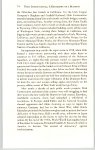
Show 178 UTAH INTERNATIONAL: A BIOGRAPHY OF A BUSINESS Peru’s iron ore exports plummeted from five million tons between January and June of 1975 to a mere 33,000 tons (sold to Romania) between July and December of the same year, at an estimated loss in export earnings of $100 million. In short, Robinson and his colleagues devised a failsafe system that made unilateral nationalization a risky business, something Velasco disregarded. Rather than gaining capital to offset the national financial crisis, the takeover of Marcona intensified his problem. The seizure also failed to rally political support, for Velasco, who was seriously ill for most of the year, could do little to guide the cohesiveness of national policy-making. This factor combined with tight control over political parties and the press to renew criticism, which then prompted a cruel governmental crackdown on political dissidents. More significant was the growing dissatisfaction among key government officials with Velasco’s handling of Peru’s economic dislocation. Military unity, the bulwark of the régime, had already begun to crack. The ailing general’s bold stroke against the Utah-Cyprus venture postponed his removal, but irritation with his rule continued to mount within official circles. This lack of direction manifested itself in Peru’s postnationalization dealings with Marcona. No communication with the company, either to settle the matter or to set a date to begin talking, followed the expropriation. In this setting, Velasco’s opponents decided to move against him. On August 29, a palace coup removed the president from office and replaced him with his foreign minister, General Francisco Morales Bermudez. Few doubted that the Marcona takeover played a contributory role. While Morales pledged to continue the revolution, events proved Velasco’s ouster to be an important watershed. The reforms initiated after 1968 slowed significantly, and many went into reverse. With this turn to the right under the new régime, talks with Marcona finally began in September 1975, but the two parties held widely divergent valuations of Marcona’s assets—the basis for determining compensation. Peru appraised Marcona holdings at a ridiculous $9 million, while Marcona’s figure was $167 million. Finally, both sides turned to Washington for mediation. President Gerald R. Ford dispatched officials from both the State and Treasury Departments to steer the parties toward agreement. |