| OCR Text |
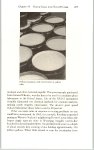
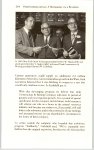
Show 202 UTAH INTERNATIONAL: A BIOGRAPHY OF A BUSINESS screwed, I want to get screwed by my friends.” Cook, with the same candor, replied that he was not exactly “a three-ball artist” (a pawn broker) but would do what he could. He added that his firm would not seek the 10 percent equity kicker IDS had required. Littlefield proposed that the American Trust Company, Crocker Bank, and Bank of America lend $7.5 million. George Eccles could arrange the additional $2.5 million through his contacts in New York banks. “The final consummation of the loan included $1.7 million from two New York banks, one of which was Bankers Trust, and $2.2 million dollars each from three San Francisco banks,” summarized Littlefield with satisfaction. The new arrangement consisted of “a five-year loan with a 20 percent compensating balance required.” Crocker Bank promptly agreed to participate, but Littlefield expected reluctance from Bank of America. He arrived for the evaluation meeting armed with a flip-chart presentation and an independent geologist’s report. Only three or four minutes into the presentation, Lloyd Mazzera, the bank’s chief lending officer, interrupted with,”Ed, I only have one question. Do you—Ed Littlefield—think this is a good deal for the Bank of America?” Without hesitation, Littlefield replied, “Yes, Lloyd, Ido.” Mazzera said, “Then we’re in.” As a sweet antidote to the stinging memory of IDS’s reluctance, Mazzera’s confidence bore fruit three years later when the mine was so profitable that the note was retired. With financing secured, company officials moved the mine swiftly toward full operational status. After groundbreaking in March 1957, the processing mill went “on stream,” not quite a year later, on February 28, 1958. The rapid construction and the outstanding efficiency of the operation attracted national attention, and Mining World magazine awarded its 1958 open-pit-mine prize to Lucky. Two years later, Utah acquired the remaining 40 percent of Lucky Mc Uranium Corporation stock. Processing the ore entailed a complicated operation involving crushing and liquefying it, then filtering out impurities. The uranium, precipitated as yellow cake, was then filtered, dried, packaged, and shipped. In summer 1961, the Lucky Mc division achieved a breakthrough by installing an X-ray emission spectrograph in its metallurgical and chemical laboratory to detect |