| OCR Text |
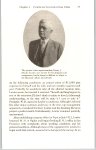
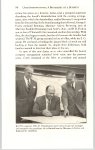
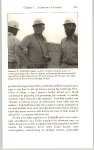
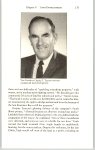
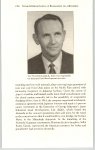
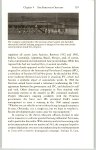
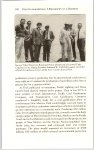
Show HT 117 A CHANGE OF COURSE talents and experiences, they developed “a great relationship,” as Littlefield termed it. “We didn’t always agree on things, but I think that we not only had a great trust and respect for each other, but also a personal affection for each other.” As the 1950s wore on, it became even more clear to this capable team that traditional money-makers were becoming sluggish, with newer ventures paying off spectacularly well. The company was building considerable muscle with successful new operations in dredging, uranium mining, and iron ore mining, yet world markets rode a roller coaster. Competition, plummeting steel prices, and disappointing international sales of iron ore and crude oil transported by Utah’s carriers took their toll. In 1958, corporate net income dropped $663,000 to $54.8 million, after a record high of $55.5 million in 1957. The continuing nationwide steel strike rippled through all economic sectors, including offshore installations. As expected, losses from the overall construction division also meant decreased earnings, although domestic construction experienced a banner year, enhancing the profit picture by more than $1 million. All in all, Utah ended the year with its fourth-highest level of net income, largely due to profits in August 12, 1958, when Littlefield was named executive NA ea eS The situation in the domestic construction arena underscored the growing inclination of top management to retreat from heavy construction into mining. Ironically, given Christensen’s leadership in that direction, other aspects of his management style raised concerns especially in Eccles’s mind. This all played out after a uranium mining. vice president and general manager, the traditional top position. Tony Mecia, Charles W. Robinson, and Albert L. Reeves all became vice presidents, with Orville L. Dykstra as treasurer. Christensen resigned as general manager, but remained president. This was a lame-duck office, however, for Littlefield’s promotion resulted, in part, from the board’s disapproval of some aspects of Christensen’s management. He had been particularly ineffective in dealing with SSTGei eee anata dees iyaataamlil Littlefield later explained that Eccles, in particular, felt that, “even though Allen had some very good points about him as far as concepts were concerned, he really couldn’t run what he could a Cyprus Mines. SS PM en — EN ey een e ee NE es SNe eT vs RT eT $id RET eee a ITT PTE ei as iish eet ac Naa i i tale eae — Chapter 7 |