| OCR Text |
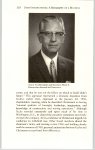
Show Chapter 13 279 MERGER Littlefield said. “None of the other companies on the list rivaled Utah’s record for uninterrupted growth or exceeded Utah’s rate of growth.” The reasons Utah International outperformed its competitors are many. To begin with, Utah sold its construction assets when the division achieved the highest profitability in its history. At the time of the sale, the construction division accounted for the majority of the company’s staff. Utah’s executives decided this traditional business had to be sold because its earnings and cash flow were frequently uncertain, making a construction-dominated company less desirable in the stock market. Second, Utah’s administrators also displayed the ability to recognize opportunity and “to get in its way,” as Littlefield put it. For example, the iron ore deposits near Cedar City, Utah, drew Mormon settlers there on an “iron mission” in 1851, but it took the construction of the Geneva Steel plant in Orem, Utah, during World War II to make the ore valuable. Utah officials also realized that established steel centers could no longer be served by nearby sources of iron ore and coking coal and would depend on faraway sources, including imports. They foresaw moving these raw materials from mine to market on a bridge of ships currently too small and inefficient. “Marcona led the way in pioneering bigger and bigger ships, ordering 32,000 ton carriers when the standard was 10,500 tons,” Littlefield pointed out, “and now ships of 150,000 tons are not uncommon.” “Once responded. Utah knocked, opportunity When Bethlehem Steel was Marcona’s biggest customer, but some years before, when Bethlehem’s geologists were in Lima, they could not be bothered to take an extra day to look at the undeveloped Marcona deposits.” In contrast, Utah management sent a representative to Lima the day after hearing of the potential iron ore deposits. As a final illustration of aggressive and discerning management, Lucky Mc’s owners offered their holdings to many major mining companies before Utah recognized its potential. In a class almost by itself, Utah successfully shifted its major line of business—construction—to a dominant position in mining. Director Arjay Miller praised this transition: “I certainly know of no other company that has reallocated all of its assets out of one industry into another, from construction to mining, and done it so |