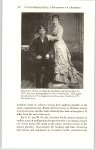
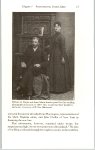
| OCR Text |
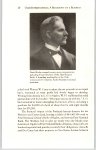
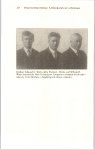
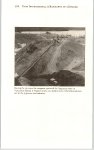
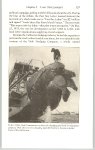
Show Sih bce a a a a a a a a aa ah ea a a es A ari eS a Chapter 1 ENTERPRISING YOUNG MEN 9 equally—a practice that endured until 1909, when the brothers agreed to divide their interests fifty-fifty. (It took less than an hour to work out the details.) Also during that period, E. O. married Martha Ann Bybee on June 25, 1879, a union that produced five daughters and three sons. In the midst of their farming and family activities, the Wattis brothers regularly took time to socialize. On November 19, 1878, E. O. wrote with the rococo flourishes of the time to C. H. Bybee: “Yourself and ladies are respectfully invited to a social party to be given at the Uintah School House on Friday evening, November 22nd. Admission 50 cents. Yours respectfully, E.O. Wattis.” At the bottom of the page, he drew two chickens with their heads upturned toward a whiskey bottle. “If you are buying chickens,” he inscribed cryptically beneath the picture, “take these and fill the bottle.” Although they farmed successfully, the brothers remained alert for business opportunities. E. O.’s early experience on the Union Pacific had apparently kindled his appetite for railroad construction. During the spring of 1881, twenty-six-year-old E. O. and W. H., who was almost twenty-two, extended their partnership to contracting with railroaders. Their first project involved work on the Oregon Short Line Railroad ten miles east of Montpelier, Idaho. After completing that contract in the early fall of 1881, E. O. took their teams to work until Christmas with his uncles on the Portneuf River above McCammon, Idaho. With his father-in-law, Ira E. Spaulding, and his brothers George, Charles, and Amos, Warren Corey had organized the Corey Brothers Construction Company earlier that year. During the spring of 1882, W. H. took a turn with the Coreys on a project in Deer Lodge, Montana, while E. O. worked a second Uintah farm that he and W. H. had purchased. The projects away from Uintah opened the brothers’ eyes to the vast and numerous construction opportunities available in the West. They traded two forty-acre farms and borrowed $800 from their friend Charlie Middleton to purchase more teams and equipment, then set off for Calgary, Alberta, where they worked on the Canadian Pacific Railroad for Corey Brothers during the summer and fall of 1883. The following spring, they returned to Canada with thirty-two horses, twice the number of teams they had taken the year before. Harsh working conditions increased the |