| OCR Text |
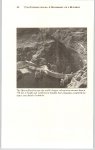
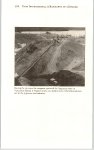
Show 80 UTAH INTERNATIONAL: A BIOGRAPHY OF A BUSINESS Utah had built bridges, tunnels, piers, and railroad lines for the Bingham and Garfield Railroad, which serviced the mining operation, for total contracts in the amount of $1.4 million, and had constructed a highway tunnel for the copper company for another $1.2 million. In 1938, Utah finished air shaft and entrance slopes in Wyoming for the Union Pacific Coal Company on a $311,000 contract. Its first large mining contract came from the Pittsburgh Coal Company in western Pennsylvania. Opening in 1943, the operation lasted until 1949, as the company made its initial steps into stripping and open-pit coal mining. During those six years, the mine produced more than 3.2 million tons of high-grade coal using a process that required the extraction of nearly thirty million cubic yards of overburden, enough material to bury a square mile under a mound of earth three stories high. The total contract amounted to more than $6.7 million. In 1945 Utah set up an exploration and development fund to support a search for mining properties; meanwhile the company continued to perform mining operations as outgrowths of its at Iron Springs, located ten miles west of Cedar City, Utah, to supply the Kaiser Steel Plant at Fontana, California. The first sales PEE EE ETSI PPTL more than $5.5 million of iron ore mining for the Colorado Fuel and Iron Corporation (CF&I) through both stripping and mining operations at the company’s Iron Mountain Mine in southern Utah. This contract led Utah into a coal strip-mining operation near Ozark, Arkansas, in 1948, where Utah crews stripped a layer of very high-grade coking coal from the Ozark-Philpott Coal Mine for shipment west to Colorado Fuel. In Arkansas, crews removed overburden up to fifty feet deep, a significant challenge. As shallow coal reserves became increasingly scarce at Ozark-Philpott, the company ventured into underground mining. Utah’s 1948 explorations also located iron ore deposits near Vancouver, British Columbia. By 1951, Utah created its wholly owned subsidiary Argonaut Company, Ltd., to work extensive magnetite ore deposits. Although Utah operated this mine only until 1957, the experience would lead to greater ventures. Also, near the war’s end, Utah began its own iron ore extraction program EIS construction activities at mines. In the late 1940s, Utah undertook |