| OCR Text |
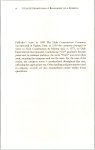
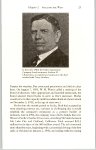
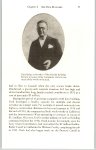
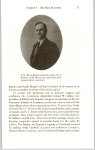
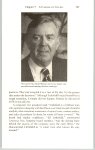
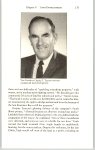
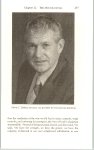
Show Chapter 6 REINVIGORATING MANAGEMENT 95 from management, Eccles said it was looking for someone with the right qualifications who “had a stake in the company.” Littlefield considered the problems built into such a job and countered with two conditions: “I have to know precisely what my job is. I have to know to whom I report, and I have to know precisely and particularly who reports to me. I’m not going into a fuzzy situation and find myself in the middle of some backbiting thing. It’s got to be straight out front.” He then looked Eccles squarely in the eye and said, “The second thing is that I have to be under no pressure to hire anybody’s relatives, yours or mine.” Eccles grinned and said, “Fine.” (Only later would Littlefield find he was the only person at Utah with such a clear job description and reporting line.) Satisfied enough, Littlefield accepted Eccles’s invitation, although he believed that he had little hope of becoming general manager, inasmuch as Christensen was only seven years older. He sensed that Eccles had confidence in him as a leader, but “he never promised the presidency to me.” The necessary clearance process for hiring Littlefield began, but Eccles seemed to know in advance that the other family shareholders, Les Corey, and Allen Christensen would all concur. Eccles then had Littlefield interview with both Corey and Christensen about the board’s offer to install him as a financial vice president. Corey had known his young relative personally for a long time and welcomed the prospect of his joining the firm. Christensen, however, was concerned about Littlefield’s conditions. He tried hard to convince Littlefield to come in with an undefined role and report strictly to him, not to the board. Littlefield adamantly refused to dicker. “Allen, ’m not going to come in on that basis,” he said. “I didn’t seek this job and don’t really care much whether I come or not. I’ve been asked by the board to come in as financial vice president—which requires a definite description of my job and authority.” Finally, at 2:30 in the morning, Christensen “realized that on those points I could be as stubborn as he was and so he yielded.” Littlefield was formally elected financial vice president and treasurer at the next board meeting, held in Ogden on March 22, 1951, with a salary of $18,000. In comparison, Corey and Christensen received $25,000 each, Stronck, $16,000, and Harris, |