| OCR Text |
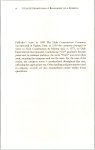
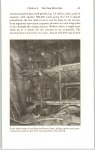
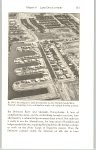
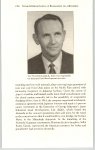
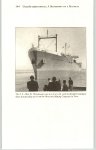
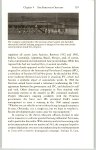
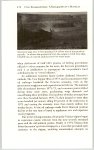
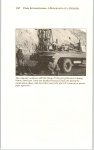
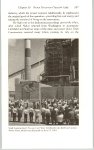
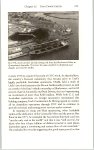
Show Chapter9 THE PERUVIAN ODYSSEY 153 after dividends were repatriated to the San Francisco headquarters. His work became critically important, for every aspect of the Marcona operation passed through his office, and he reported directly to both Christensen and Littlefield. Within a short time, Littlefield related, “Marcona was operated as if it was a branch of Utah,” because of Robinson’s “very meaningful role in the whole management of Marcona.” With markets for its ore stable and growing, Marcona accelerated production during fiscal year 1954. As a result, the venture’s earnings about doubled those of the previous year. To management’s satisfaction, the operation on the ground was running smoothly. The dock facilities and road network rounded off nicely, and the employee quarters of San Juan City began to resemble something other than temporary shacks. A crusher at the mine site that had initially caused some problems began to operate more efficiently and increased the quantity of output dramatically. Despite this, a modest downturn occurred in 1955, prompting company officials to evaluate anew the scope of the Marcona gambit. One glaring area of concern was the unstable and volatile nature of shipping costs. Consequently, company officials decided to take a bold step and enter the shipping industry itself. Christensen seemed to anticipate this move from the beginning. After the conclusion of the negotiations in 1952, Littlefield had taken Christensen aside and said, “Allen, we’re really in the mining business now”; to which Christensen replied, “Yes, and we also just went into the shipping business.” In June 1955, Utah and Cyprus chartered in Liberia San Juan Carriers, Limited, as a wholly owned subsidiary of Cia. San Juan. The new shipping firm purchased and refitted a small bulk carrier later that year, after which it placed its first orders with Japanese shipyards, in a clever quid quo pro, for the immediate construction of large specialized ore carriers. Two sister ships, the Allen D. Christensen and the Harvey §. Mudd came on line in 1956. Each had a capacity of nearly 32,000 dead weight tons (dwt). Coupled with charter vessels under long-term contract, San Juan Carriers managed to transport Marcona ore during 1956 at a cost below prevailing charter rates. The shipping company earned almost $1.9.million during fiscal year 1956, which combined with |