| OCR Text |
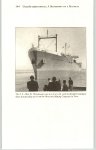
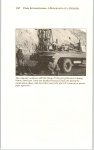
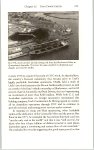
Show 154 UTAH INTERNATIONAL: A BIOGRAPHY OF A BUSINESS Marcona’s earnings of some $3.6 million and Cia. San Juan’s $2.4 million to bring the group’s total to nearly $9 million. Buoyed with this success, company officials placed an order for two additional bulk cargo vessels with Japanese shipyards in 1956. Christened in 1958 as the San Juan Merchant and the San Juan Traveler, these ships (unlike the other three company ships) could handle cargoes of both ore and petroleum, a versatility that represented an increased earning capacity for the Marcona group. Because of the Suez Crisis of 1956, a demand for petroleum tankers to service the Caribbean had arisen. Now company ships could transport ore to overseas markets, back-haul petroleum on the return trip, and earn extra revenue for the Marcona group. By 1960, San Juan Carriers operated five ships with a collective freight capacity of 176,000 dwt; and by 1963, three new 70,000-plus dwt ore-petroleum carriers had joined the San Juan fleet, the capacity of which then swelled to more than 600,000 dwt. In retrospect, Marcona’s intrepid move into the shipping business in 1955 was even pluckier than it seemed, given the dimensions of the ships it ordered. At that time, Littlefield recalled, “the maximum-sized ship used by existing carriers for such purposes ... was 16,000 tons capacity, with most ships being 10,500 tonners.” The decision to purchase larger ships was based on economies of scale—larger ships were more cost effective than smaller ships. Littlefield liked to tell of having lunch years later with the chief executive officers of the Dollar Line and General Steamship Lines, who chuckled that Utah’s gamble had been a lucky one—for Littlefield did not “know enough to be scared.” Even so, San Juan Carriers later acquired 72,000 and 100,000 dwt vessels that dwarfed that first 31,400 tonner. During these years, markets for Marcona ore expanded to include not only Japan and Europe, but also Mexico and Argentina. Robinson proposed sending the ships with Panamanian registry on from Japan to Sumatra, where they could load crude oil for refining on the West Coast. Next the ships would enter the Panama Canal, where the salt water in the holding tanks would be flushed and replaced with fresh water for use in the port town of San Juan, adjacent to Marcona facilities, thus assuring back-haul profits. Littlefield liked the idea and called Larry Ford, a friend at Standard |