| OCR Text |
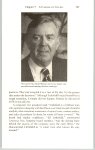
Show Chapter9 THE PERUVIAN ODYSSEY 165 long before the same critics who were attacking IPC began to ask pointed questions about Marcona. Enrique East moved ageressively and early to parry these thrusts, courting the pleasure of the Belaunde regime and engaging in a largely fruitful public relations campaign to deflect criticisms. Realizing that restraints on Marcona and other foreign companies would certainly harm the economy, both the regime and the opposition gradually backed away from their probes into Marcona’s operations, although they unilaterally enacted a tax increase on profits, from 20 to 25 percent. At the same time, to satisfy the radical fringe, they persisted in the highly visibly assault on IPC. In order to get in front of the problem, company officials inaugurated more frequent discussions with Santa in 1964, hoping these talks would characterize a “good corporation.” This meant delivering concessions to the government agency at a steady but slow pace. Marcona guaranteed Santa its commitment to maintain adequate reserves. It also agreed to increase royalty payments from a minimum rate of 75 cents to 92.5 cents per ton and to meet the growing needs of the Chimbote steel mill. The approach seemed to be working when Santa rewarded these concessions with an extension of the concession by an additional decade, to 1982. As part of this extension, Marcona agreed to offer Santa an option to buy 50 percent of the operation in 1982 and to become a full partner. At first glance, such an offer seemed one-sided in favor of the Peruvians, but it also made good sense from the company’s perspective. First, the income of the partnership would substitute for royalty payments and would leave Marcona’s margin of profit basically unchanged. Second, it would not interfere with overall long-term corporate profit growth projections, which relied increasingly on shipping and non-Peruvian endeavors. Finally, a joint venture with Santa meant government participation, bringing more security for the mining venture. With relations on a seemingly positive course, East assured Robinson that “we are winning the battle,” but events beyond the company’s control soon interfered. In late 1966, Peru’s economy began to sputter and by spring 1967, Belaunde’s government had resorted to massive deficit spending. His opponents noted that this was happening while foreign companies like Marcona posted |