| OCR Text |
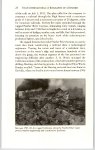
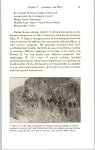
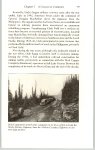
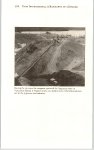
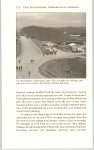
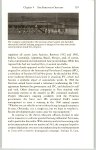
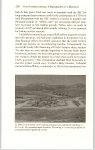
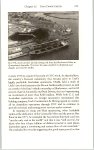
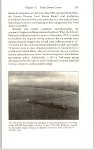
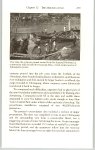
Show 193 Vieaa i BLACK GOLD AND YELLOW CAKE grass, tumbleweeds, and small shrubs. At Navajo as elsewhere, strip-mining processes involved leaving a layer of overburden in a “spoil pile” alongside the cut. To reach Ta TS ET ee TE SF PST ee Pe also gave money for an athletic field, bleachers, and athletic equipment at a local Navajo boarding school. Additionally Utah offered Navajos a unique opportunity to learn mine engineering and related technologies by hiring them to fill gaps in the skilled work force when employees took vacation time. Such practical exposure to the mining industry encouraged many students to pursue professional training. In a related effort, the company donated money to the New Mexico Institute of Mining and Technology and cosponsored with that organization the first Opportunity Conference on Materials Engineering and Energy Resources. More than ninety people attended, at least half of them Native American high school students with high aptitudes in mathematics and an inclination to study one of the sciences. Other conference participants included interested Native American alumni, tribal leaders, high school teachers and counselors, and mineral industry representatives from firms on or near reservations in New Mexico. Following the conference, Utah representatives recruited at schools with significant Native American enrollments, demonstrating again the company’s genuine commitment toward using Navajo talent whenever possible. By the 1970s, whatever else mining companies did bought little public goodwill if their reclamation efforts did not meet increasingly stringent standards. Although Utah promised from the beginning to reconstruct the desert topography, this constituted no small commitment. Reclamation costs might run as high as $500 per acre versus a sale price of $100. Utah’s record in this area reflected well on the overall quality of its entire commitment at Navajo-Four Corners. Before the company turned a shovel of earth on the reservation, it began planning to reconstruct the desert topography to resemble that of neighboring undisturbed areas. This meant replicating the barren beauty of the arid landscape, its dry washes and arroyos, occasional sandstone escarpments, and fragile topsoil, thin and capable of supporting only sparse vegetation— eS employees donated livestock to Navajo Missions Incorporated and TER reservation, the company contributed more than $21,000. Mine Na ak NA a ra de ce Sk a a ae oe eae Chapter 10 |