| OCR Text |
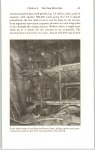
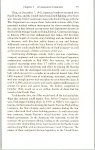
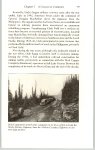
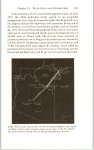
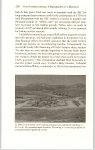
Show Chapter 10 BLACK GOLD AND YELLOW CAKE 199 A major breakthrough occurred, however, in late December 1955, when Utah geologists decided to abandon dry drilling (then a district practice) and begin drilling below the water table to test the body of ore. Heretofore, prospecting confined itself essentially to the shallower areas of the central and eastern Gas Hills, where the yellow oxide uranium minerals lay at depths of eighty-five feet or less. The extensive brownish-black coffinite-uraninite-type ores remained undiscovered. In January and February 1956, Wyoming experienced one of the coldest winters in its history, and wet drilling became almost impossible. As a result, Utah personnel formulated a new technique in league with the drilling contractor Sprague and Henwood. Using diesel oil instead of water as a circulating fluid not only permitted the drilling to continue despite bitter temperatures, but it also kept the sand cores frozen, greatly improving recovery. Project supervisors then discovered that dry ice could produce a super-cooled drilling fluid, yielding the advantages of frozen cores regardless of atmospheric temperatures. As engineers carefully and continuously logged the holes, the true regional geologic picture began to unfold: Gas Hills had multiple and complex ore horizons. The overall pattern resembled a series of meandering channels, stacked one on top of the other. Thus the north end of the now famous Project 4 channel appeared. As new subsurface deposits became manifest, this ore developed into a more or less continuously braided zone of mineralization more than three miles long and one thousand or more feet wide. Late spring 1956 saw a lively boom underway in the Gas Hills area, as other mining companies took a greater interest. By late summer, approximately thirty drills operated, as word spread that tremendous tonnages of deep ore underlay the disappointing surface of the twenty-square-mile Gas Hills district. Utah drilled more than 47,000 miles, with results convincing Bourret that Lucky Mc likely could promise a minimum content of one million tons of high-grade uranium ore. In light of Bourret’s glowing assessment, in early fall 1956, the board gave its full support to the venture. It approved $300,000 to acquire 60 percent (3,638,748 shares) of Lucky Mc’s common stock at an average price of 8.25 cents per share. On October 31, 1956, after the offer, the market price for the stock stood at $1.44 |