| OCR Text |
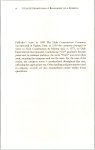
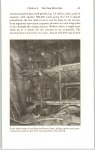
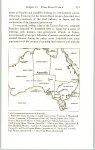
Show 222 UTAH INTERNATIONAL: A BIOGRAPHY OF A BUSINESS group announced on December 17 that it had obtained a license to export up to four million tons of iron ore per annum under the liberalized export policy. Utah successfully concluded its five-year investigation in early 1964. The iron ore at Mount Goldsworthy in the west and the coal at Queensland to the east gave the company firm footings for two legs of its new mining complex. Following further discussions with Japan, it achieved the crucial third leg of marketing. Late in the year, MGMA announced an initial agreement with Japanese steel mills: it would supply 16.5 million tons of iron ore over a seven-year period commencing in 1966, promising an annual revenue of $23 million. The group now calculated that it would take $50 million to build the facilities necessary to produce 2.5 million tons annually. MGMaA also negotiated a shipping contract with its San Juan Carriers affiliate to transport the raw ore to Japan. A few months later, Utah Development also reached an agreement with Mitsubishi Shoji Kaisha, Ltd., covering sales of UDC’s Queensland coking coal that would provide gross revenue of approximately $130 million over a ten-year period and increase Utah’s total backlog of mineral sales to half a billion dollars. With deliveries scheduled to begin in 1968 under the contract, total sales would involve 13.5 million tons of coking coal at an opening rate of 500,000 tons annually, with a rapid increase to three times that amount. UDC estimated that $15-18 million would be required for the large strip-mining project at Blackwater. The coal mining venture in Queensland would resemble Utah’s Navajo Mine with a large dragline operation, although the Australian coal would undergo both complex processing and lengthy transshipment—two hundred miles by rail to the port at Gladstone, then a 3,850-mile journey to Japan—while Navajo’s coal moved only a few miles from mine to power plant. Such huge start-up costs—$50 million at Goldsworthy and million at Blackwater—naturally concerned Utah $15-18 executives, but they realized the staggering profit potential and hedged their bets with escalation clauses to guard against inflation. “The boldness of Utah’s strategy,” wrote one Australian, “is reflected ... in the extent of the imaginative and detailed planning that preceded development.” Computerized data from more than |