| OCR Text |
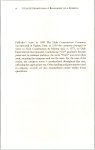
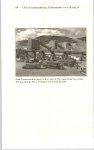
Show 240 UTAH INTERNATIONAL: A BIOGRAPHY OF A BUSINESS Despite the return to power of the Liberals, criticism of Utah International continued unabated, due to its multinational, bigbusiness image. This was particularly disquieting to company officials, because its huge investment in Australian mining projects concentrated its risks. The situation worsened when Utah’s positive relations with organized labor deteriorated when the company refused to hire Australian crews for its coal tankers because union prices were too high. (Wages among Australian labor unions had nearly doubled between 1970-75.) Labour leaders reacted by branding the corporation a “multinational rip-off,” “arrogant,” and “American.” Wall Street Journal reporter Barry Newman wrote that the feeling among Australian labor unions could be summarized in an epigram: “The coal went to Japan; the profits went to America.” To improve its corporate image, the company created the Utah Foundation, which donated nearly $3 million to Australian charities and produced television commercials featuring Rod Taylor, an Australian turned Hollywood actor. Both the press and the public nevertheless turned against Utah when it announced a $174 million profit on $685 million in sales in 1977. As one Utah executive lamented, “The only thing worse than failure in Australia is success.” At that point, the company had no choice but to follow the approved model set out by Australia’s federal government, allowing Australian interests to buy up significant blocks of its mining concerns. In July 1976, Utah reduced its holdings of Queensland coal from 89 percent ownership to 76 percent. Australian Mutual Provident Society, the nation’s largest mutual life insurance company, assumed the balance with Mitsubishi Development Pty. In 1980, UDC moved its corporate headquarters to Sydney. Three years later, Broken Hill Proprietary of Melbourne purchased Utah’s assets in Australia for $2.4 billion, and the company’s nearly three decades in “the land down under” came to an end. As an epilogue, Littlefield summed up Utah’s Australian involvement in a retirement interview. From the first job Utah Construction & Mining undertook—the Big Eildon Dam—to its final involvement as part of the largest mining consortium in the |