| OCR Text |
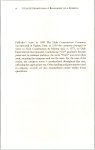
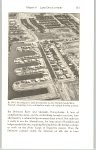
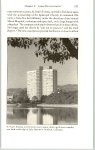
Show 246 UTAH INTERNATIONAL: A BIOGRAPHY OF A BUSINESS you know damned well the Bank of America will, and we’ll take the business to them.” Quite a discussion between the brothers ensued, prompting director Lawrence Dee to say, “This I’m thoroughly enjoying.” According to Littlefield, “this was typical Marriner.” Littlefield credited Marriner’s knowledge, abilities, and extensive contacts in consistently aiding the company’s progress, but it ran both ways. While effective and synergistic cooperation between board chairmen and top managers was not unusual in successful corporations in twentieth-century America, the Eccles-Littlefield relationship was arguably exceptional. The two men understood each other very well, and each recognized and admired the genius and skills of the other. There also existed an extraordinary trust between them, providing a seamlessly unified will at the top of management, strengthened by different perspectives. As management was realigned, the commitment to persevere in heavy construction continued, partly due to beckoning building opportunities in California. In 1961, Utah linked up with sponsor Haas and Haynie Corporation to tackle a major joint-venture construction project for the City and County of San Francisco. This $3.4 million Civic Center Garage unfortunately became a nightmare of subcontractors’ claims that dissipated all profits. The annual profit outlook, however, brightened with the completion of a meat processing plant in South San Francisco for Armour and Company, a two-year project that brought in more than $2.5 million. Late that year, Utah bid successfully for a contract from Alameda County to build a parking facility and heliport in Oakland, a profitable job that wrapped up in 1963. Also underway in Alameda County was the $3.5 million Barrows Hall, a ninestory, reinforced-concrete building that opened in March 1964 at the University of California in Berkeley. Utah held a 30 percent interest in a contract with Johnson and Mapes Construction Company to build the Philco Corporation plant near Palo Alto, completed in 1962. The year after, Utah completed a silica sand plant in Ione for International Pipe and Ceramic at a cost of $1.5 million. At mid-decade, a Utah crew built a small plant in California for the Hercules Powder Company to produce ammonium nitrate for use as commercial fertilizer or, when mixed with diesel oil, as an explosive that could be used instead of dynamite. |