| OCR Text |
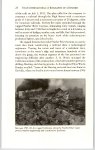
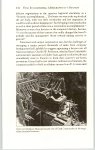
Show Chapter 12 THE MULTINATIONAL 254 Travaux Entreprises Schneider (CITES) and three other French contractors, Utah’s role was providing technical assistance and personnel. In addition to recovering all costs, Utah received 6 percent of the net profit on the $27.5 million project. The dam was composed of alluvial material with an impervious core, stood four hundred feet high, and had a crest length of two thousand feet. More than eighteen million cubic yards of materials went into this dam. The Serre Poncon Reservoir held nine hundred million cubic meters of water to supply power, irrigation, and flood control. Dam building in Tunisia and Liberia, railroad work in the Republic of the Congo, and construction projects in Nigeria brought the company into the developing continent of Africa. The completion of the Oued Nebaana Dam in March 1966, for example, marked a significant step in the development of Tunisia’s economy. The earth- and rock-filled dam, fifteen hundred feet long with 80,000 acre-feet of storage, supplied irrigation water to some 15,000 acres planted in fruit orchards and vegetables. During almost four years of work in Tunisia, Utah’s personnel contended with more than one flood that hampered their progress with unforeseeable delays. Despite a variety of such problems, the embankments for the main dam were completed by October 1965. Concrete work on the spillway, requiring 40,000 cubic yards, ended in February 1966. South of the Sahara, Utah erected in 1964 the University Center in Lagos for the University of Nigeria at a cost of $862,000. Then, in the mid-1960s, it participated in the Mount Coffee Hydroelectric Project on the St. Paul River, some fifteen miles northeast of Monrovia, the capital of Liberia. This $18 million job included building a rock-filled dam, concrete spillways, and a powerhouse containing two 15,000-kilowatt generating units. Raymond International sponsored the joint venture, in which Utah had approximately a 35 percent interest. After a delay starting the project, due to the rainy season, and the need to relocate part of the dam and redesign part of the powerhouse, the job ended on schedule in September 1966. Another international joint venture for Utah in Africa was a $26 million, 172-mile railroad in the Republic of the Congo (formerly French Equatorial Africa), finished in 1962. Working with the |