| OCR Text |
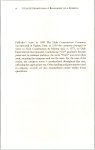
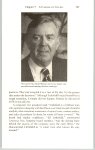
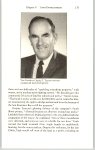
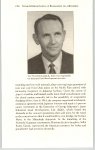
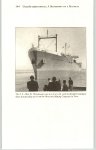
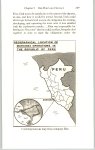
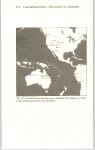
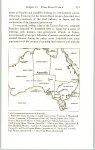
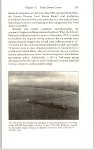
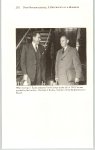
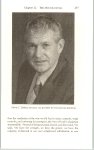
Show Chapter 13 MERGER av? toward the decade’s end, senior management became aware of a vast Japanese market for Utah’s minerals. At that time, Utah had only 150 shareholders, most of whom were members of the Browning, Christensen, Dee, Eccles, and Wattis families, with the E. O. Wattis family being the largest shareholder. Representatives from these families also constituted the board of directors. Subsequently, no genuine market existed for the available shares, although the newspapers carried bid and ask prices that were usually below book value. Significant managerial changes became as important to the company’s future as diversification when, in 1951, Allen Christensen took the general manager’s chair and Littlefield came aboard as financial vice president and treasurer. The company then pushed forward at a terrific pace over the next twenty-five years. For example, through the Marcona Corporation and Mount Goldsworthy, Utah became a major iron ore producer, with operations in Peru, New Zealand, Brazil, and Australia. In Queensland, Utah Construction’s mineral experts made perhaps the most significant discovery of metallurgical coal ever, and the company consequently became the world’s largest exporter of coking coal. Because it used ships owned by its Marcona joint venture or by its own charters, Utah became a substantial player in the ocean transport of bulk commodities. The firm also became a major uranium producer for the United States, with two mines and mills in Wyoming. Utah’s major achievements included the development of huge western reserves of steam coal in New Mexico and Colorado to serve mine-mouth power plants. The company’s Navajo Coal Mine in the Four Corners area became the nation’s largest when it opened in 1963. Utah also acquired a 25 percent interest in the Pima Copper Mine near Tucson, Arizona, when Cyprus Mines hired it to construct the operational facilities. The firm also discovered and developed a major copper deposit on Vancouver Island, British Columbia. In 1969, the company sold the assets of its construction division to Fluor Corporation, increasing the pace at which its intensive mineral explorations began to pay off. “T guess it’s fair to say Iam the chief proponent of the idea that if you’re going to be a mining company,” said Littlefield, “you’d |