| OCR Text |
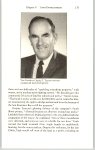
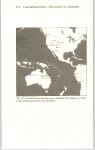
Show 280 UTAH INTERNATIONAL: A BIOGRAPHY OF A BUSINESS well. This achievement was due primarily to competence in strategy formulation including a precise execution of plans.” Persistence also characterized top management’s style. For instance, in 1953, United States Steel Company officials told Utah management of plans to build an integrated steel facility in Pittsburgh, California. Immediately, company executives positioned the firm to provide U.S. Steel with iron ore and coking coal, finding iron ore near Carson City, Nevada. The quest for coal took Utah to Canada, Mexico, and South America, ending in Queensland, Australia, where it found its most valuable mineral discovery. Given an impending shortage of natural gas in the West, Utah searched for large, strippable deposits of coal. “This was not too hard to do because no one else was looking for such undefined deposits,” Littlefield explained. “The black rock the Navajo Indian picked up off the ground to burn in his hogan was the clue to a billion-ton reserve.” Ironically, it turned out initially to be easier to find coal than customers for the coal. When Utah made mistakes, the company was quick to recognize and correct them. For example, dredging, manufacturing land, and land development were anything but blue-ribbon winners. “Our biggest loss ever,” he said ruefully, “started from a modest investment in a golf course at Pauma Valley, California. Never did I have more management help from the board of directors. Each was a self-appointed expert on how to run a golf club.” The end point of all these business activities was to enhance shareholder value, as Littlefield described: First, we put our major efforts on the minerals that were more stable in price like iron ore and coal and put less emphasis on those minerals like copper, lead and zinc that are volatile in price. Second, we positioned ourselves to take advantage of markets that were growing rapidly: alternate energy forms to petroleum [and] international trade in raw materials for the steel industry. Finally, we made a virtue out of a necessity and built up a mineral sales backlog of $6 billion in long-term contracts with [price] escalation protection, giving us an assurance of margins and volume |