| OCR Text |
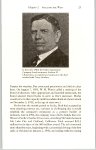
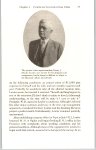
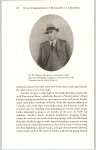
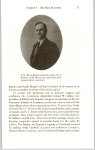
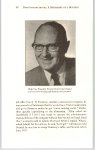
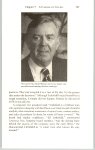
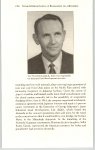
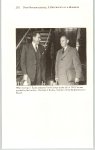
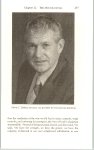
Show Chapter 13 MERGER 281 that the investor found very appealing. These factors found their way into our price/earnings ratio. Indeed they did. The original $24,000 investment in shares had a value in 1951 of “perhaps $7.2 million if they could have been sold at book value,” Littlefield estimated. In late 1976, they represented 43 percent of the total Utah shares, valued at $926 million. “TI found it a very exciting adventure,” Littlefield reminisced in 1978, “to come into top management as I did and ... be one of the participants and one of the architects in taking the firm from one of earning $44.5 million a year to one that was approaching profit levels of $200 million.” He most enjoyed the post of chief executive officer “because it offers the most challenges, has the widest range of problems to solve, and if, you get the job done well, it has to be the most satisfying.” Along these lines, Littlefield demonstrated his awareness of the constant need to groom executives for top management succession. In his own retirement plan, he reported, “I started being concerned about the transition of authority some long time before I made any Overt motions ... but I identified [Bud] Wilson as the one whom I felt had the potential for the job.” As soon as the opportunity presented itself, Littlefield positioned Wilson as executive vice president, then as president and chief operating officer when Littlefield became chairman and chief executive officer. Wilson began his managerial career at Utah in charge of its uranium operations. Following Tony Mecia’s death, Wilson took over Mecia’s responsibilities as a temporary assignment. Although Littlefield searched outside the company for someone to fill Mecia’s position permanently, he decided Wilson was best qualified. Littlefield told his executive compensation committee he would not work beyond the age of sixty-five. When it came time for him to ‘hand over complete control of the company to Wilson as chairman and chief executive officer, he would do as the board suggested, including resigning, to accomplish a smooth transition. The board agreed that the appropriate approach was for Littlefield to turn over increasing authority to Wilson so that when the time finally came, the transition of authority and power could be accomplished without any abrupt change. These plans went into effect in the early |